
Conversion Rate Optimization, usually shortened to CRO, is one of the most practical skills in digital marketing because it focuses on what happens after someone lands on your website. Plenty of businesses spend time and money attracting visitors, but traffic alone does not pay the bills. Results improve when more of those visitors take useful actions, such as buying a product, booking a demo, requesting a quote, or joining an email list.
That is why CRO matters. It helps you improve the performance of the traffic you already have instead of treating growth as a traffic problem only. A small improvement in conversion rate can increase revenue, reduce wasted ad spend, and make your website easier to use. In other words, CRO is not about tricking people into clicking. It is about understanding what users want, removing friction, and making the next step clearer.
This beginner’s guide explains conversion rate optimization in plain English. You will learn what counts as a conversion, how to calculate conversion rate, where people usually drop off, what to test first, and which metrics deserve attention. If you are new to CRO, the goal is simple: give you a practical framework you can use to make better decisions without guessing.
What Conversion Rate Optimization Actually Means
Conversion Rate Optimization is the process of improving a page, journey, or funnel so that a higher percentage of visitors complete a desired action. That action is called a conversion. CRO combines research, user experience thinking, analytics, testing, and clear messaging to help more people move forward.
What counts as a conversion?
A conversion depends on the type of business and the purpose of the page. For an online store, a conversion may be a completed purchase. For a software company, it may be a free trial signup. For a local service business, it could be a phone call or contact form submission. For a media site, it might be a newsletter subscription or account registration.
Beginners often think conversions only mean sales, but that is too narrow. Many businesses track both macro conversions and micro conversions. Macro conversions are the big business outcomes, such as purchases or qualified leads. Micro conversions are smaller actions that show progress, such as clicking a pricing page, adding a product to cart, or starting a form.
The basic conversion rate formula
The formula is straightforward:
Conversion rate = conversions / total visitors x 100
If 1,000 people visit a page and 40 complete the desired action, the conversion rate is 4 percent. This number gives you a simple baseline. It does not tell the whole story, but it gives you a starting point for comparison over time.
Why the definition matters
Many CRO efforts fail early because the business has not clearly defined the goal. If you do not know what a success action is, you cannot optimize for it. Before changing headlines, buttons, or layouts, decide what the page is supposed to make visitors do. Clear goals make analysis more useful and testing more reliable.
Why CRO Matters More Than Just Getting More Traffic
Growing traffic sounds exciting, but it is often expensive, slow, or both. CRO gives you another path: improve the value of each visit you already receive. This is why experienced marketers care so much about conversion rate optimization. It increases efficiency across channels instead of depending on constant acquisition.
Efficiency beats volume when budgets are limited
Imagine you spend money on paid ads and send 5,000 visitors to a page each month. If the page converts at 1 percent, you get 50 conversions. If you improve the page so it converts at 2 percent, you get 100 conversions from the same traffic. You did not need to double your budget to double your result.
That is the real power of CRO. It can lower your effective cost per lead or cost per sale because more visitors take action. This is especially valuable for small businesses and teams that cannot keep increasing ad spend every month.
Better conversions usually mean a better experience
Good CRO is closely tied to user experience. When visitors understand the offer, trust the business, and can complete the next step without confusion, conversion rates often rise naturally. Improvements such as clearer messaging, faster load times, simpler forms, and better mobile layouts do not just help the business. They help the visitor too.
CRO supports stronger decision-making
Another benefit is that CRO encourages disciplined thinking. Instead of asking which trendy tactic to copy, you start asking better questions: Where are users struggling? Which page creates friction? What evidence supports this change? That mindset improves marketing quality far beyond one landing page or campaign.
The Main Elements That Influence Conversions
There is no single button color or magic trick that lifts conversions everywhere. Conversion rate optimization works because it improves a set of core elements that shape how visitors think and act. When one or more of these elements is weak, conversion rates often suffer.
Clarity and value proposition
Visitors should quickly understand what you offer, who it is for, and why it is useful. If the headline is vague, the page tries to say too much, or the offer is buried under filler text, people leave. Strong pages are clear about the outcome, the audience, and the next step.
- A good value proposition explains the benefit in practical terms.
- Clear page structure helps visitors scan without effort.
- Message match matters, especially when users arrive from ads, emails, or search results.
Friction and trust
Friction is anything that makes action feel difficult, risky, or annoying. Long forms, surprise fees, confusing menus, weak product details, and too many choices can all reduce conversions. Trust is the opposite force. Reviews, testimonials, case studies, guarantees, transparent pricing, and clear policies reduce doubt and help users feel safe moving forward.
If a page asks for commitment before earning confidence, it will often underperform. Trust signals do not need to be flashy. They need to be believable and relevant.
Speed and mobile usability
Many beginner CRO problems are technical, not persuasive. A slow site, broken mobile layout, unreadable text, or difficult checkout can quietly damage performance. Modern users are impatient, especially on phones. If the page lags, the button is hard to tap, or the form is frustrating on a small screen, many visitors will abandon the process before they even evaluate the offer.
This is why CRO is not only a copywriting task. It sits at the intersection of content, design, usability, and performance.
How To Find Where Visitors Drop Off
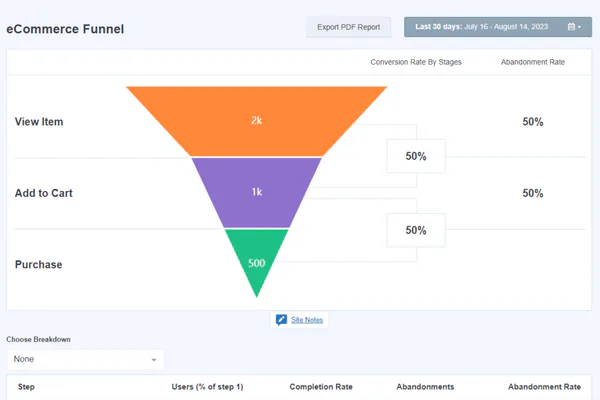
One of the most useful CRO habits is learning how to spot weak points instead of changing random things. Beginners often jump straight into redesign mode, but the better approach is to identify where people lose momentum. That gives you a stronger reason for each improvement.
Use funnel reports and page analytics
Start with your analytics platform. Look at the path users take from one step to the next. For example, how many people land on a product page, add to cart, begin checkout, and complete purchase? Or how many visit a service page, click a CTA, start a form, and submit it?
Sharp drop-offs usually point to a problem worth investigating. High traffic with low action suggests a message or offer issue. Strong interest at the top with abandonment later may indicate friction during signup or checkout.
Heatmaps and session recordings reveal behavior
Analytics tells you what happened. Heatmaps and session recordings often help you understand why. You may discover that users never scroll far enough to see key information, repeatedly click non-clickable elements, or hesitate on a form field that seems confusing.
These tools are especially useful when a page looks fine internally but still underperforms. Real behavior often exposes problems that teams no longer notice because they are too familiar with the design.
Form analysis and direct feedback add context
If your goal involves a form, pay attention to form completion rate, field-level drop-off, and error frequency. A single unnecessary field can create more resistance than expected. Short surveys, support chats, or customer interviews can also uncover objections that data alone will not explain.
- Ask what nearly stopped people from taking action.
- Ask what information felt missing or unclear.
- Ask what made them trust your business enough to continue.
When several signals point to the same issue, you have a much stronger CRO opportunity.
A Simple CRO Process Beginners Can Follow
Conversion rate optimization becomes much easier when you treat it like a repeatable process instead of a one-time project. The exact tools may vary, but the core workflow stays the same. For beginners, a simple system is better than a complicated framework you will not maintain.
Follow one page and one goal at a time
Trying to optimize an entire website at once usually creates confusion. Start with one important page and one clear goal. That could be a pricing page that should generate demo requests, a product page that should increase add-to-cart rate, or a lead form that should improve completion rate.
Turn observations into a hypothesis
Once you identify a likely problem, write a basic hypothesis. A good hypothesis connects an issue to an expected result. For example: if we shorten this form from eight fields to four fields, more visitors will complete it because the effort feels lower. This keeps your work grounded in reasoning instead of opinion.
Use a repeatable workflow
- Choose a conversion goal. Define the action that matters most for the page.
- Measure the baseline. Record current conversion rate and any supporting metrics.
- Study the page. Review analytics, user behavior, and friction points.
- Prioritize one change. Pick an improvement with meaningful potential impact.
- Launch the change or test. Implement it in a way you can evaluate.
- Review the outcome. Compare results and document what you learned.
The last step matters more than many beginners realize. CRO compounds when you build an internal record of what improves conversions, what fails, and which patterns keep appearing across pages.
Easy CRO Wins You Can Try First

Not every conversion problem requires a major redesign. In many cases, small but focused changes can create noticeable improvement. The best early CRO wins usually come from reducing confusion, increasing trust, and making the next action easier to complete.
Improve the message before redesigning the layout
Many low-converting pages have a messaging problem, not a design problem. If visitors do not immediately understand the offer, changing colors or moving sections around will not solve much.
- Rewrite the headline so the main benefit is obvious.
- Use subheadings that explain who the offer is for.
- Replace generic CTA text with wording that reflects the action more clearly.
- Remove filler copy that adds length without adding confidence.
Simplify forms and next steps
Every extra click, field, or decision can lower conversions. Ask whether each step is necessary right now. If you can collect less information at the beginning, do it. If you can split a long process into smaller steps, test that approach. If users need to create an account before buying, consider whether guest checkout would reduce friction.
Beginners often overestimate how much information they need upfront. In many cases, a shorter path converts better because it respects the user’s time.
Add proof and reassurance where hesitation appears
If people pause before converting, they may need more confidence. Add social proof near key decision points, not only in a testimonials section far down the page. Highlight guarantees, shipping clarity, onboarding support, customer logos, case study results, or review counts where users are likely deciding whether to proceed.
Useful reassurance often answers practical questions such as:
- Will this work for someone like me?
- Is there risk if I choose this?
- How long will it take?
- Can I trust this company with my payment or details?
A/B Testing Basics Without the Confusion
A/B testing is one of the best-known CRO methods, but beginners sometimes give it more power than it deserves. A/B testing is simply a way to compare two versions of a page or element to see which performs better. Version A is the current version. Version B includes the change you want to evaluate.
When A/B testing makes sense
Testing is useful when you have enough traffic to compare outcomes with reasonable confidence and when the change is important enough to matter. It works well for pages that already receive steady visits and conversions. If traffic is extremely low, you may need to make obvious usability fixes first and measure before-and-after performance more cautiously.
What to test first
Start with changes that affect user understanding and motivation, not tiny cosmetic tweaks. Strong test candidates include:
- Headline and offer framing
- Form length and field order
- CTA placement and wording
- Pricing presentation
- Trust signals near decision points
- Page structure for mobile users
Testing button color before fixing a confusing value proposition is usually a poor use of time.
Why one meaningful change at a time matters
If you change everything at once, you may improve results but learn very little. Beginners should usually test one strong idea per variation so the result is easier to interpret. Also avoid ending tests too early because of a temporary spike. Short-term swings are common. The point of CRO is to reduce guesswork, not replace it with impatience.
Common CRO Mistakes Beginners Should Avoid
Conversion rate optimization is simple in principle, but several common mistakes can waste time or create misleading conclusions. Avoiding these errors will improve your results faster than copying random tactics from social posts or case studies.
Making decisions without enough evidence
Opinions are easy to collect and hard to trust. Internal teams often suggest changes based on preference, not data. A redesign may feel cleaner to the team while performing worse for real users. Whenever possible, support decisions with analytics, behavior patterns, user feedback, or test results.
Changing too many variables at once
When you update the headline, images, CTA, layout, and offer at the same time, you make it difficult to know what caused the result. Large changes are sometimes necessary, but beginners should still document what changed and why. Learning matters as much as short-term uplift because it improves future decisions.
Ignoring mobile users and technical friction
Some pages look acceptable on desktop but perform poorly on phones. If mobile traffic is important, a desktop-first CRO mindset will miss critical problems. Slow loading, broken input fields, sticky popups, and awkward tap targets are common conversion killers.
Optimizing the wrong goal
Higher click volume is not always better if lead quality drops or refunds rise. CRO should support business outcomes, not vanity metrics. A page that generates fewer but better-qualified leads may outperform a page that produces more low-intent form submissions.
Copying tactics without context
What works for a global software brand may fail for a local service company, and what lifts ecommerce checkout performance may not help a B2B consultation page. Use outside examples for inspiration, not as proof. Context matters in CRO because audience, traffic source, trust level, and buying intent all change user behavior.
Key CRO Metrics To Track From the Start
You do not need a huge dashboard to begin. A short list of practical metrics is enough for most beginners. The key is to choose numbers that reflect user progress and business value, then review them consistently.
Core metrics worth tracking
- Conversion rate: The percentage of visitors who complete the desired action.
- Click-through rate: Useful for measuring how often users click a CTA, ad, or email link.
- Bounce rate or engagement signals: Helpful for spotting pages that fail to hold attention.
- Form completion rate: Shows how many users finish a form after starting it.
- Add-to-cart rate: Valuable for ecommerce pages where purchase intent starts before checkout.
- Checkout completion rate: Reveals whether friction appears late in the buying process.
- Average order value: Important when you want to improve revenue, not just raw conversion count.
- Revenue per visitor: A useful metric for understanding the financial impact of CRO work.
Use supporting metrics to understand quality
A higher conversion rate can look good while hiding a weaker outcome. For example, if you reduce form friction too aggressively, lead volume may rise but lead quality may fall. That is why CRO should connect to downstream results such as qualified leads, sales acceptance, repeat purchase rate, or refund rate when possible.
Track trends, not isolated snapshots
One day of data rarely tells a useful story. Look for patterns across meaningful time periods, compare similar traffic sources, and annotate major changes. Good measurement makes your CRO program more reliable because it helps you distinguish between normal variation and real improvement.
Getting Started With CRO This Week
The easiest way to begin is to avoid overcomplicating the process. You do not need advanced software, a full experimentation team, or dozens of tests running at once. You need one page, one goal, and a willingness to learn from evidence.
A practical beginner action plan
- Pick one high-value page. Choose a page that already gets traffic and has a clear business goal.
- Define the conversion. Decide exactly what action you want more users to complete.
- Record your baseline. Note current conversion rate and a few supporting metrics.
- Review the user journey. Check mobile experience, page clarity, speed, and friction points.
- Identify one likely obstacle. Focus on the biggest problem, not every possible problem.
- Make one meaningful improvement. Update the page or set up a simple A/B test.
- Measure the result. Compare performance and write down what you learned.
If you repeat that cycle consistently, you will build a stronger website over time. CRO rewards patience and clear thinking. Even small gains can compound across pages, campaigns, and months.
Where beginners should focus first
If you are unsure where to begin, start with pages closest to conversion. These often include product pages, pricing pages, free trial pages, lead forms, booking pages, and checkout flows. Improvements here usually affect revenue or lead generation more directly than top-of-funnel pages.
Also remember that CRO is not separate from the rest of marketing. Better audience targeting, clearer offers, and stronger message match often improve conversion performance before any formal test begins.
Conclusion
Conversion Rate Optimization is best understood as a disciplined way to make your website work harder for the business and easier for the user. It is not a collection of hacks. It is an ongoing process of identifying friction, improving clarity, testing meaningful ideas, and measuring what happens next.
For beginners, the smartest move is to keep CRO simple. Define one conversion goal, study one important page, make one evidence-based improvement, and review the outcome carefully. Over time, that approach builds real knowledge about your audience and creates performance gains that are more sustainable than chasing traffic alone.
If you remember one principle from this guide, let it be this: more visitors are helpful, but better conversions make existing traffic more valuable. That is why CRO remains one of the most practical skills in modern marketing.