
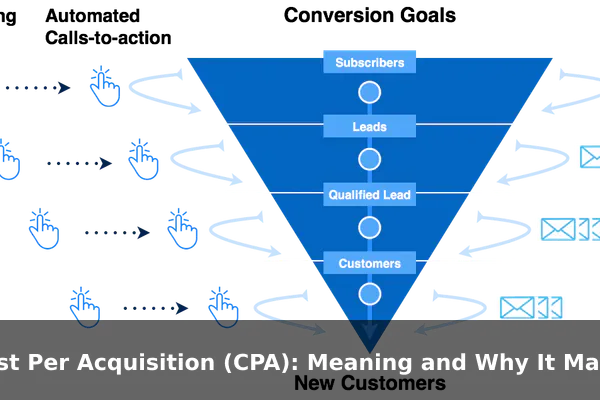
Marketing can generate impressions, clicks, traffic, and engagement, but none of those numbers guarantee a real business result. At some point, every campaign has to answer a harder question: how much did it cost to turn attention into an actual customer action? That is where Cost Per Acquisition (CPA) becomes one of the most practical metrics in marketing.
CPA matters because it ties spending to outcomes. Instead of focusing only on how many people saw an ad or visited a page, it measures the cost of getting a meaningful conversion such as a purchase, demo request, app install, subscription, or qualified lead. For teams that want efficient growth, CPA helps connect marketing activity to budget discipline, profitability, and decision-making.
This makes CPA especially useful for businesses that need to compare channels, judge campaign quality, and avoid wasting money on tactics that look busy but do not produce results. In the sections below, you will learn what Cost Per Acquisition means, how to calculate it, how it differs from related metrics, what causes CPA to rise or fall, and how to improve it without damaging long-term growth.
What Cost Per Acquisition (CPA) Means
Cost Per Acquisition (CPA) is the average amount of money a business spends to generate one desired conversion. The word acquisition can refer to different outcomes depending on the business model, but the core idea stays the same: CPA tells you what it costs to get one completed action that matters to the business.
In simple terms, if you spend money to market a product or service and want to know how efficient that spend was, CPA gives you a direct answer. A lower CPA usually means you are acquiring customers or conversions more efficiently. A higher CPA means each result is costing more, which may put pressure on margins or slow growth.
What counts as an acquisition
An acquisition is not always a sale. It depends on the goal of the campaign and the way the business defines success. Common acquisition events include:
- Ecommerce: a completed purchase
- SaaS: a trial signup, booked demo, or paid subscription
- Lead generation: a qualified form submission or consultation request
- Mobile apps: an app install or first in-app purchase
- Local services: a booked appointment or phone call from a high-intent prospect
This is why CPA should never be discussed without context. A business acquiring paying customers is measuring something different from a business acquiring newsletter signups. Both may use the term CPA, but the economics behind those outcomes are not the same.
CPA is different from traffic metrics
One reason CPA is so useful is that it sits much closer to business value than early-stage marketing metrics. Impressions tell you how many times an ad was shown. Clicks tell you how many people responded. Traffic tells you how many visitors reached a page. None of those metrics, on their own, confirm that the campaign created a valuable result.
CPA pushes the analysis further down the funnel. It asks whether the money spent actually produced the conversion that the business wanted. That makes it a stronger decision metric when budgets are limited and growth needs to be measured in outcomes rather than activity.
Why the definition must be explicit
CPA becomes misleading when teams use inconsistent definitions. If one report counts any lead form as an acquisition while another report counts only sales-qualified leads, the numbers cannot be compared fairly. The same problem happens when one campaign uses purchase CPA and another uses signup CPA.
Before measuring anything, define the acquisition event clearly. That single step improves reporting quality, makes channel comparisons more honest, and prevents bad decisions based on mixed data.
How to Calculate CPA
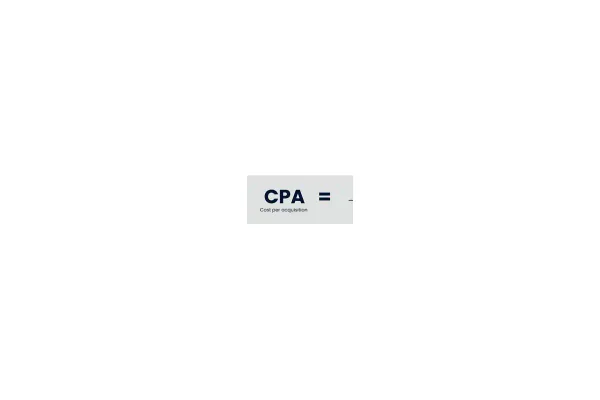
The basic formula for CPA is straightforward: CPA = Total Campaign Cost / Total Acquisitions.
This formula tells you the average cost required to produce one desired conversion. If the number is lower than the value created by that conversion, the campaign may be economically healthy. If the number is too high, the campaign may need optimization, a stronger offer, or a different audience strategy.
Understanding the two parts of the formula
To calculate CPA correctly, you need to define both inputs clearly:
- Total campaign cost: the amount spent to generate conversions. This may include ad spend only, or it may include creative, software, agency fees, and labor if your team prefers a more complete view.
- Total acquisitions: the number of completed actions you count as successful outcomes, such as purchases, signups, or qualified leads.
Some teams track a media CPA, which uses only advertising spend. Others track a broader fully loaded CPA, which includes more operational costs. Neither is automatically wrong, but mixing them in one dashboard creates confusion. Pick a method and stay consistent.
A simple CPA example
Imagine an online store spends $2,500 on paid ads in one month and generates 50 purchases from those campaigns.
- Total campaign cost = $2,500
- Total acquisitions = 50 purchases
- CPA = $2,500 / 50 = $50
That means the business spent an average of $50 to acquire each purchase. Whether that is good or bad depends on what happens next. If the average order produces only $35 in gross profit, the CPA is too high. If the average customer produces $150 in gross profit over time, the CPA may be acceptable or even strong.
Blended CPA vs campaign-specific CPA
Not all CPA calculations answer the same question. Two common versions are worth separating:
- Campaign-specific CPA: measures one campaign, ad set, or channel in isolation. This is useful for optimization and budget decisions.
- Blended CPA: measures total spend across all paid efforts divided by all acquisitions. This gives a top-level efficiency view for the whole program.
Campaign-specific CPA helps identify what is working. Blended CPA helps leadership understand the total cost of growth. Both are valuable, but they serve different decisions.
Why accuracy depends on tracking
The formula looks simple, but weak tracking can distort the result. If conversions are missing, duplicated, or attributed to the wrong source, CPA becomes unreliable. A business may think one channel is efficient when another channel actually did the work earlier in the journey.
Good CPA reporting depends on clean conversion tracking, a clear attribution approach, and a consistent definition of what qualifies as an acquisition.
Why CPA Matters in Marketing Decisions
CPA matters because it helps marketers move from guessing to allocating budget with evidence. Instead of asking which channel feels more effective, teams can ask which channel is producing meaningful outcomes at an acceptable cost.
It reveals budget efficiency
Every business has a limit to how much it can spend to win a customer or lead. CPA shows whether campaigns are operating inside that limit. If your acceptable CPA is $40 and a campaign is producing conversions at $68, the campaign may need major changes before more budget is added.
This protects companies from the common mistake of rewarding volume without checking cost quality. A campaign that produces many conversions can still be unhealthy if those conversions are too expensive.
It helps compare channels more fairly
Marketing teams often spread spend across search, social, display, video, affiliates, email retargeting, or influencer collaborations. CPA gives them a common efficiency lens. Even when formats differ, the metric can help answer a practical question: where are we buying results most efficiently?
That does not mean the lowest CPA always wins, but it does mean budget decisions become more grounded. A channel with slightly higher volume but dramatically worse CPA may not deserve more spend. A channel with modest volume but efficient CPA may be a stronger candidate for scaling.
It protects margins and supports profitable growth
Growth is not automatically healthy. A company can increase sales while damaging profitability if acquisition costs rise too fast. CPA helps prevent this by keeping attention on unit economics. It forces marketers to consider the cost side of growth, not just the outcome side.
This is especially important for businesses with tight margins, long sales cycles, or expensive competition. In those cases, a rising CPA can quickly turn growth into a cash flow problem.
It improves forecasting
Once a business understands its typical CPA, forecasting becomes more practical. If one qualified acquisition costs about $80 on average and the company wants 500 acquisitions, the budget model can start from that assumption. The estimate will never be perfect, but it is far better than planning based on traffic goals alone.
CPA also helps leadership ask better strategic questions:
- How much can we spend next quarter without hurting profitability?
- Which channels deserve more budget?
- Where is acquisition efficiency improving or declining?
- What conversion rate or landing page improvement would materially reduce cost?
These are operational questions, and CPA is one of the most useful metrics for answering them.
CPA vs. CAC and Other Related Metrics
CPA is often confused with other marketing and growth metrics. The overlap is understandable, but each metric answers a different question. Knowing the difference prevents bad comparisons and weak reporting.
CPA vs. Customer Acquisition Cost (CAC)
CPA usually refers to the cost of getting a defined conversion from a specific campaign, platform, or marketing effort. Customer Acquisition Cost (CAC) is broader. CAC often includes a wider range of expenses tied to acquiring a paying customer, such as marketing, sales salaries, software, onboarding costs, and overhead.
In short, CPA is often a campaign metric. CAC is more of a business-level acquisition metric. A paid search campaign may have a CPA of $45 for trial signups, while the company may still have a much higher CAC once sales and operational costs are included.
CPA vs. Cost Per Lead (CPL)
Cost Per Lead (CPL) measures the cost of generating a lead, not necessarily a customer or final conversion. That makes CPL an earlier-funnel metric. It can be useful, especially for B2B and service businesses, but it says less about actual revenue impact unless lead quality is strong.
A low CPL can look attractive while hiding a serious problem: the leads may be cheap because they are weak. CPA is often the more demanding metric because it focuses on a more valuable completed action.
CPA vs. conversion rate
Conversion rate tells you what percentage of users completed the desired action. CPA tells you how much it cost to produce each one. These two metrics are closely connected. When conversion rate improves and spend stays stable, CPA often falls.
Still, conversion rate alone is incomplete. A page can convert well but attract the wrong audience. In that case, the CPA may not improve enough, or the resulting customers may be low value.
CPA vs. Return on Ad Spend (ROAS)
ROAS measures revenue generated for each advertising dollar spent. CPA measures cost per conversion. ROAS is revenue-focused; CPA is efficiency-focused.
Both are useful, and neither fully replaces the other. CPA is often more helpful when the campaign goal is a clear acquisition event. ROAS is especially useful when revenue per conversion varies significantly, such as in ecommerce with different order values.
The practical takeaway
Use CPA when you want to understand the cost of generating a defined action. Use CAC when you want the bigger business-level cost of winning a customer. Use CPL when leads are the main funnel milestone. Use ROAS when revenue return matters most. Strong reporting frameworks rarely rely on only one metric.
What Affects a High or Low CPA
CPA does not move randomly. It rises and falls because of specific inputs in the marketing funnel. When you understand those inputs, optimization becomes much more structured.
Audience targeting and intent
One of the biggest drivers of CPA is audience quality. If ads are shown to people with weak intent or poor fit, clicks may come in but conversions stay low. That pushes CPA higher because the business pays for attention without enough successful outcomes.
By contrast, more relevant audiences usually convert better. Search traffic from high-intent keywords, retargeting pools, or tightly segmented customer profiles often produces lower CPA because the message reaches people closer to action.
Creative quality and message match
Ads that are unclear, generic, or poorly matched to the audience tend to waste spend. Creative affects who clicks, why they click, and whether expectations are set correctly. Strong creative does more than attract attention. It pre-qualifies the audience and leads the right people into the funnel.
If the ad promises one thing and the landing page delivers another, conversion efficiency drops and CPA rises. Message consistency matters.
Landing page experience
Many CPA problems are not traffic problems at all. They are landing page problems. Slow load times, cluttered design, weak calls to action, distracting navigation, missing trust signals, and long forms can all reduce conversion rates.
When fewer visitors convert, the same ad spend produces fewer acquisitions. The result is a higher CPA even if the ad platform performance looks stable.
Offer strength
The quality of the offer plays a major role in acquisition cost. A compelling offer, clear pricing, useful incentive, or strong product-market fit can lower resistance and improve conversion efficiency. A weak offer forces marketing to work harder, which often increases CPA.
This is why CPA is not only a media-buying issue. It also reflects product positioning, sales friction, and perceived value.
Competition and market conditions
In competitive industries, media costs often rise because more advertisers target the same audience. That can increase cost per click or cost per thousand impressions, which then pushes CPA upward if conversion rates do not improve at the same time.
Seasonality can create the same effect. During peak promotional periods, inventory becomes more expensive and consumer attention gets harder to win efficiently.
Why universal benchmarks can mislead
Marketers often ask what a good CPA is, but there is no universal answer. A good CPA depends on margin, lifetime value, sales cycle length, average order value, and retention. A $100 CPA might be excellent for a high-value B2B service and terrible for a low-margin impulse purchase.
The best benchmark is not a random industry average in isolation. It is a target built around your business economics and compared against your own historical performance.
How to Improve CPA Without Hurting Growth
Improving CPA is not about cutting spend blindly. That approach can reduce volume so aggressively that growth stalls. The better goal is to reduce waste, strengthen conversion efficiency, and scale the parts of the funnel that already show promise.
Start with diagnosis before optimization
Before changing bids, creative, or budgets, identify where the problem actually sits. A useful diagnostic sequence looks like this:
- Check whether tracking is accurate and recent changes did not break attribution.
- Review traffic quality by audience, keyword, placement, and device.
- Compare click-through rate, landing page conversion rate, and acquisition quality.
- Look for funnel stages where performance drops sharply.
- Separate strong segments from weak segments before making broad changes.
This prevents the common mistake of treating every CPA issue as an ad problem.
Optimize the highest-friction stage first
If click costs are reasonable but CPA is high, the landing page or offer may be the better place to improve. If conversion rates are healthy but acquisition cost is still too high, audience targeting or platform bidding may need attention instead.
Practical ways to improve CPA include:
- Refine audience targeting to focus on higher-intent users
- Exclude poor-performing keywords, placements, or demographic segments
- Test new creative that better qualifies the click before it happens
- Align ad copy and landing page messaging more tightly
- Reduce form fields or checkout friction
- Improve page speed and mobile usability
- Strengthen social proof, guarantees, or trust signals
- Adjust bidding strategy based on actual conversion quality
Segment performance instead of averaging everything
Average CPA can hide real opportunities. One campaign may look mediocre overall while containing a highly efficient audience segment. Another may look acceptable overall while hiding a wasteful device category or placement group.
Segment by source, device, geography, audience type, offer, and creative theme. That usually reveals where acquisition efficiency is being won or lost.
Protect quality while reducing cost
A lower CPA is not always better if it comes from lower-quality conversions. For example, broadening targeting may reduce cost temporarily by bringing in easier clicks, but if those users churn quickly or never buy again, the improvement is superficial.
The right goal is a sustainable CPA tied to valuable acquisitions. Any optimization that lowers cost but weakens customer quality should be treated carefully.
Scale winners gradually
Once you find a channel, audience, or offer with healthy CPA, scale it with control. Sudden budget increases can destabilize performance, expand into lower-quality inventory, or trigger rising costs. Gradual scaling helps preserve efficiency while testing how much room the campaign really has.
Strong CPA management is not only about lowering numbers. It is about lowering them intelligently while keeping the business growing.
Common CPA Mistakes to Avoid
CPA is powerful, but it is also easy to misuse. Several common mistakes can lead to bad decisions even when the metric appears simple.
- Judging CPA without customer value: a low CPA means little if customers do not generate enough profit or retention.
- Comparing unlike conversions: a purchase CPA and a newsletter signup CPA are not interchangeable.
- Ignoring attribution limits: channels often influence each other, so last-click reporting may understate upper-funnel impact.
- Optimizing only for cheap conversions: lower cost can come at the expense of lower quality.
- Using too little data: early fluctuations can make CPA appear better or worse than it really is.
- Blending all costs inconsistently: switching between media-only and fully loaded cost models creates misleading trends.
- Assuming the lowest CPA deserves the most budget: some channels may have better scale potential even if CPA is slightly higher.
The pattern behind these mistakes is the same: CPA should guide decisions, but it should not be used without context. Good marketers treat it as a core metric inside a broader system, not as a standalone truth.
When CPA Is a Good Metric and When It Is Not Enough
CPA is one of the best metrics for judging campaign efficiency, especially when the goal is a clear and measurable action. It is particularly useful in performance-focused environments where teams need to connect budget to conversions quickly.
When CPA works especially well
CPA is highly effective when:
- The acquisition event is clearly defined
- Conversions can be tracked reliably
- Marketing teams need to compare channels or campaigns
- Budget efficiency matters as much as conversion volume
- The business has a clear target acquisition cost based on margin or value
In these situations, CPA becomes a practical operating metric. It helps teams optimize campaigns, shift budget, and forecast performance with discipline.
When CPA is not enough on its own
CPA becomes less complete when the business has long customer lifecycles, variable order values, or major differences in customer quality. In those cases, a low CPA can look impressive while hiding poor long-term economics.
That is why many companies pair CPA with other metrics such as:
- Lifetime value (LTV): how much value a customer creates over time
- Retention rate: whether acquired customers stay engaged or keep buying
- Payback period: how quickly acquisition cost is recovered
- Gross margin: whether revenue translates into real profit
- Lead-to-close rate: whether leads actually become customers
For example, a software company may accept a relatively high CPA if the average customer stays for years. A low-margin retail business may need a much tighter CPA because there is less room for error.
The best way to use CPA
The smartest use of CPA is as part of a layered decision system. Use it to measure efficiency, but connect it to value, quality, and retention. That balance helps businesses grow with more confidence and fewer expensive surprises.
Conclusion
Cost Per Acquisition is one of the clearest ways to evaluate whether marketing spend is turning into real business results. It gives marketers a practical way to measure efficiency, compare channels, control budgets, and protect profitability. More importantly, it shifts attention away from vanity metrics and toward outcomes that matter.
Still, CPA works best when it is defined carefully, tracked accurately, and interpreted in context. A good CPA is not the lowest number on a dashboard. It is a number that makes sense for the value of the customer, the economics of the offer, and the growth goals of the business. When used that way, CPA becomes more than a reporting metric. It becomes a decision-making tool for smarter marketing and more sustainable growth.
