
B2B marketing — or business-to-business marketing — refers to the strategies and tactics companies use to promote their products and services to other businesses rather than individual consumers. If you sell software to HR departments, equipment to factories, or consulting services to enterprises, you are already operating in the B2B space.
Unlike selling to everyday shoppers, B2B marketing involves longer sales cycles, multiple decision-makers, and a much heavier emphasis on trust and long-term value. Understanding how it works — and how to do it well — is essential for any company that wants to grow its revenue through business clients. This guide covers the meaning, strategy, real-world examples, and common pitfalls of B2B marketing in a way that is easy to apply, even if you are just starting out.
What B2B Marketing Means
At its core, B2B marketing is the process of making one business aware of, interested in, and eventually willing to buy from another business. The “customer” here is not an individual consumer browsing social media — it is a procurement manager, a CFO, a marketing director, or a team of stakeholders who collectively decide whether to invest in a solution.
B2B marketing serves several key purposes:
- Lead generation: Attracting potential business clients who might need your product or service.
- Nurturing prospects: Building trust and educating leads over time so they eventually buy.
- Supporting the sales team: Providing sales reps with content, tools, and qualified leads they can convert.
- Retention and expansion: Keeping existing clients engaged and helping them see value in upgrading or renewing.
B2B marketing is not a single campaign — it is an ongoing system of communication, value delivery, and relationship management designed to turn businesses into long-term customers.
How B2B Marketing Differs From B2C Marketing
Many marketers come from a B2C (business-to-consumer) background and assume the same playbook applies in B2B. It does not. The differences are significant and affect everything from tone to channel choice.
Audience and Decision-Making
In B2C, one person usually makes the purchase decision — often quickly and emotionally. In B2B, decisions typically involve multiple stakeholders across departments, each with their own priorities. A SaaS platform sale might require approval from IT, finance, the end-user team, and senior management. This means your marketing must speak to multiple personas at once.
Sales Cycle Length
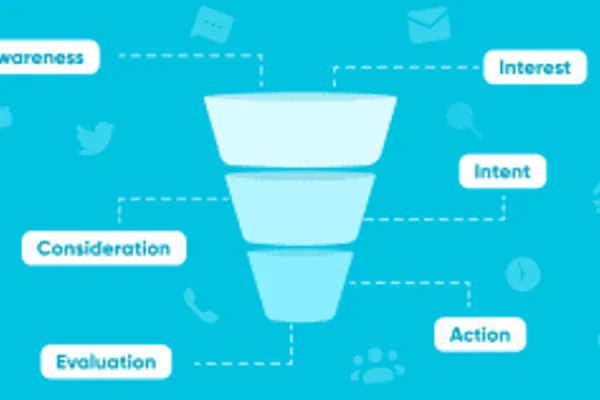
B2C purchases can happen in minutes. B2B deals often take weeks, months, or even longer. During that time, your marketing content must continue to educate, reassure, and move prospects through the funnel without losing them to a competitor who stays more visible.
Messaging and Tone
B2C marketing often leads with emotion, lifestyle, and identity. B2B marketing leads with logic, ROI, and risk reduction. Buyers want to know: Will this save us money? Will this reduce complexity? What happens if it does not work? Your messaging needs to answer those questions clearly and confidently.
The Core Parts of a B2B Marketing Strategy
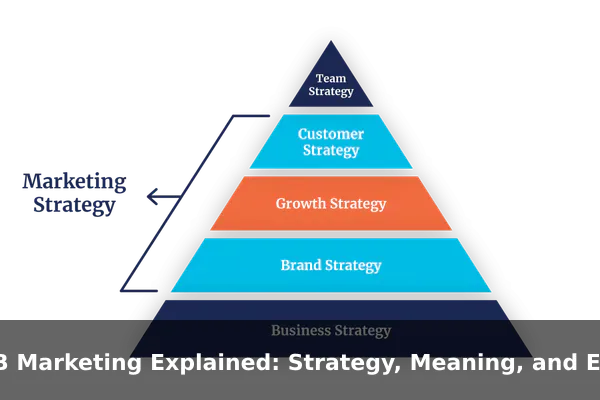
A working B2B marketing strategy is not a collection of random tactics — it is a structured plan built on a clear understanding of who you are selling to and what problem you solve better than anyone else.
Target Audience Definition
Start by defining your ideal customer profile (ICP): the type of company most likely to buy, benefit from, and stay with your product. Consider company size, industry, geography, budget range, and the specific pain points you address. The more specific your ICP, the more focused and efficient your marketing becomes.
Positioning and Value Proposition
Your value proposition answers the question: Why should a business choose you over every other option? It should be clear, specific, and focused on measurable outcomes — not vague claims like “industry-leading” or “best-in-class.” A strong B2B value proposition connects your offer directly to a business outcome the buyer already cares about.
Channel and Content Plan
Decide which channels your target buyers actually use and what type of content will help them at each stage of the buying journey. Awareness content differs from decision-stage content. A blog post explaining a concept is not the same as a case study that proves results — both have a role, but at different moments in the relationship.
Sales Alignment
B2B marketing does not operate in isolation. Marketing and sales must agree on what a qualified lead looks like, how leads are handed off, and how success is measured. Misalignment between these two teams is one of the most common causes of wasted marketing spend and lost revenue.
Popular B2B Marketing Channels and Tactics
There is no single best channel for B2B marketing. The right mix depends on your audience, budget, and goals. Below are the most commonly used channels and when each works best.
- Content marketing: Blog posts, whitepapers, guides, and videos that educate your audience and build organic traffic over time. Works well for long-term brand authority and inbound lead generation.
- SEO: Helps potential buyers find you when they search for solutions to their problems. Essential for any B2B company that wants a steady stream of inbound interest.
- Email marketing: One of the most cost-effective B2B channels. Used for nurturing leads with valuable information and moving them closer to a buying decision without requiring a large ad budget.
- LinkedIn: The primary social platform for B2B. Useful for thought leadership content, paid ads targeting by job title and company size, and direct outreach to decision-makers.
- Webinars and virtual events: Allow you to demonstrate expertise and build trust with large groups of potential buyers at once while capturing contact information for follow-up.
- Account-Based Marketing (ABM): A highly targeted approach where marketing and sales focus resources on a specific list of high-value accounts rather than broad audiences. Common in enterprise B2B.
- Paid advertising: Google Ads and LinkedIn Ads can accelerate lead generation, especially for companies that cannot yet rely on organic traffic alone.
Examples of B2B Marketing in Action

SaaS Company Using Content and Demos
A project management software company targets operations managers at mid-sized businesses. Their marketing strategy includes a blog covering productivity and team management topics to drive organic search traffic, a free trial offer to lower the barrier to entry, and automated email sequences that guide trial users toward a paid subscription. They also run LinkedIn ads targeting operations roles at companies with 50 to 500 employees. The combination of inbound content and targeted paid outreach creates a consistent pipeline of qualified leads.
Manufacturer Using Trade Events and Email
An industrial parts manufacturer attends two major trade shows per year to meet procurement managers face to face. Between events, they maintain an email newsletter that highlights product updates, industry news, and case studies from existing clients. This combination of in-person trust-building and consistent digital communication keeps them top-of-mind when buyers are ready to place an order.
Agency Using Case Studies and Referrals
A digital marketing agency targeting e-commerce businesses invests in detailed case studies that show exact results achieved for past clients — percentage increases in revenue, improvements in ad efficiency, and conversion rate gains. These case studies are shared directly with prospects during sales conversations and serve as the most persuasive piece of their marketing. Satisfied clients are also asked for referrals, which generate warm leads that close at a far higher rate than cold outreach.
How to Measure B2B Marketing Success
Vanity metrics — like social media followers or page views — rarely tell you whether your B2B marketing is actually working. Focus instead on metrics tied directly to revenue and pipeline growth.
- Lead quality and volume: Are you generating enough qualified leads that match your ideal customer profile?
- Cost per lead (CPL): How much does it cost to acquire each lead through each channel?
- Conversion rate: What percentage of leads become paying customers?
- Pipeline contribution: How much of the total sales pipeline can be attributed to marketing activity?
- Customer acquisition cost (CAC): The total cost of acquiring one new customer, including both marketing and sales spend.
- Return on marketing investment (ROMI): The revenue generated compared to the marketing budget spent during the same period.
Tracking these metrics consistently helps you identify what is working, where to invest more, and what to stop spending on.
Common B2B Marketing Mistakes to Avoid
Even experienced marketers make these mistakes when operating in B2B environments:
- Targeting too broadly: Trying to reach every possible business instead of focusing on your ideal customer profile leads to diluted messaging and wasted budget.
- Weak or vague messaging: If a prospect cannot quickly understand what you do and why it matters to them specifically, they will move on to a competitor who communicates more clearly.
- Poor sales-marketing alignment: When sales and marketing disagree on lead definitions and handoff processes, qualified leads get lost, ignored, or followed up too late.
- Chasing vanity metrics: Optimizing for likes and impressions instead of leads and pipeline does not grow revenue, even if your social media presence looks impressive.
- Inconsistent follow-up: In B2B, most deals require multiple touchpoints before a decision is made. Stopping outreach after one or two attempts leaves a significant amount of revenue unrealized.
A Simple Framework to Start Your B2B Marketing Plan
If you are building a B2B marketing plan from scratch, this straightforward framework gives you a practical starting point without requiring a large team or budget:
- Define your ICP: Identify the exact type of company you want to serve, including size, industry, geography, and key decision-maker roles.
- Clarify your value proposition: Write one or two sentences that explain clearly what problem you solve and what measurable outcome the buyer gets from working with you.
- Choose two or three channels: Do not try to be everywhere at once. Pick the channels where your buyers spend time and focus your energy there first.
- Create helpful content: Build content that answers the real questions your buyers have at each stage — awareness, consideration, and decision.
- Run small tests: Launch campaigns with a limited budget, measure results honestly, and iterate before scaling investment.
- Review and improve monthly: Set a regular cadence to review your metrics, cut what is not working, and double down on what is generating pipeline.
B2B marketing does not need to be complicated to be effective. A focused strategy built on a clear understanding of your buyer, a sharp value proposition, and consistent execution will consistently outperform a complex campaign built on guesswork.
Conclusion
B2B marketing is the engine that connects businesses to the clients who need them most. Unlike consumer marketing, it requires patience, precise targeting, and a deep understanding of how businesses make buying decisions. Whether you are a startup landing your first clients or an established company trying to scale, a clear B2B marketing strategy is essential for sustainable growth.
Start with a well-defined ideal customer profile, craft a message that speaks directly to their problems, and choose channels that put that message in front of the right people at the right time. Measure what matters, avoid common pitfalls, and commit to continuous improvement. That is how B2B marketing drives real, lasting business results.
