
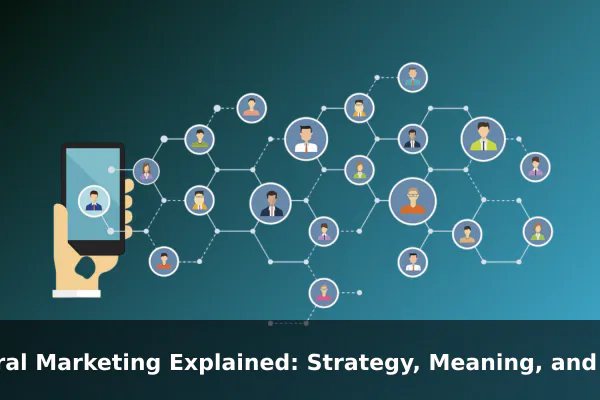
Some content spreads across the internet seemingly overnight — shared by thousands, discussed in comment sections, and referenced in conversations for weeks. That is viral marketing at work. At its core, viral marketing is the practice of creating content or campaigns designed to be shared rapidly, multiplying a brand’s reach far beyond what paid distribution alone could ever achieve.
Unlike traditional advertising, which pushes a message to a fixed audience, viral marketing depends on people voluntarily choosing to pass the content along. That voluntary sharing is what gives it exponential potential — and what makes it one of the most studied and pursued tactics in modern digital marketing. Understanding viral marketing means recognizing it is not pure luck. While no campaign can be guaranteed to go viral, the strategies behind the most successful ones follow recognizable patterns. This guide breaks down what viral marketing means, how it works, what it takes to build a campaign, and how to measure whether it delivered real business results.
What Viral Marketing Means
Viral marketing refers to any strategy that encourages individuals to pass a marketing message to others, spreading brand awareness organically in a way that mimics how a virus moves through a population. The term gained wide use in the late 1990s alongside the rise of email forwarding and early social platforms, but the underlying concept is much older: compelling messages travel fast when people find them worth repeating.
What separates viral marketing from broad social media promotion is its emphasis on engineered shareability. The campaign itself contains sharing triggers built directly into the content. The goal is to design something so interesting, funny, emotionally resonant, or useful that audiences feel an internal pull to pass it on.
- It spreads person to person through social and digital networks
- Sharing is voluntary, not paid or externally prompted
- Growth becomes exponential when each person shares with more than one other person
- It relies on emotional, social, or utility-based triggers embedded in the content
How Viral Marketing Works
The engine behind viral marketing is the network effect. When one person shares content with three connections, and each of those connections shares with three more, reach grows geometrically in a very short time. A single well-timed share can reach hundreds of people within hours if the content truly resonates.
The Viral Coefficient
Marketers use a concept called the viral coefficient (K) to measure how efficiently content spreads. If K is greater than 1, each person who encounters the content shares it with more than one additional person, producing exponential growth. If K falls below 1, the spread eventually slows and stops. The vast majority of content sits below 1, which is exactly why campaigns that break through are so memorable and rare.
Emotional Triggers That Drive Sharing
Research consistently shows that people share content when it produces a strong emotional response. The emotions most reliably linked to high share rates include:
- Awe and inspiration
- Genuine humor
- Surprise or unexpectedness
- Deep relatability and shared identity
- Moral conviction or a desire to inform others
Content that connects to a widely felt cultural moment tends to travel further because people use it to express something about themselves when they share it — it functions as social currency.
The Role of Audience Participation
The most powerful viral campaigns invite participation rather than passive viewing. Challenges, duet formats, reaction videos, and user-generated content campaigns turn audiences from viewers into co-creators. That shift dramatically increases both the volume of content produced and the emotional investment of the people sharing it.
Core Elements of a Viral Marketing Strategy
Going viral may never be fully predictable, but building the right strategic foundation improves the probability significantly. Every element below appears consistently in campaigns that achieve broad organic spread.
Deep Audience Insight
Viral content does not appeal to everyone — it resonates intensely with a specific group. Before creating anything, research what your target audience already shares, what makes them laugh or feel moved, and what they want to be seen associating with publicly. Content made for a community performs better than content broadcast at a market segment.
Message Simplicity
Complex ideas rarely spread. The core message should be immediate and graspable in seconds. People share what they can understand and summarize quickly for someone else. If explaining the campaign requires more than two sentences, the concept probably needs simplification.
Platform Fit
Each platform carries its own native formats, behavioral norms, and community expectations. Content built for TikTok’s short-form, trend-riding culture will not land the same way on LinkedIn’s professional feed. Matching the content format and tone to the platform’s sharing culture is a non-negotiable part of any viral strategy.
Timing and Cultural Relevance
Content that connects to an active trend, a current cultural conversation, or a shared moment in the news cycle has a built-in reason to exist right now. Audiences are already primed to engage with that topic, which lowers the friction needed to capture and hold attention.
A Built-In Reason to Share
Effective viral content gives the sharer a social reward — it makes them look funny, insightful, caring, or ahead of the trend. A clear participation prompt, whether a challenge, a question, or a simple tag-a-friend call to action, amplifies this effect by reducing the decision barrier to zero.
Popular Types of Viral Campaigns
There is no single path to virality, but several campaign formats have proven reliable at generating the kind of rapid, voluntary spread that defines viral success.
Social Challenges
Participation-based challenges tied to a unique hashtag invite users to create and share their own versions of a specific action. These spread efficiently because joining requires minimal effort and the social reward — being part of a visible movement — is immediate and real.
Viral Videos
Short or long-form video content remains among the most shared formats online. Whether humorous, visually spectacular, or emotionally powerful, video creates an immersive experience that audiences actively want others to see and react to.
Memes and Relatable Content
Memes compress a widely shared feeling or situation into an instantly recognizable, low-effort format. Brands that successfully fit their message into existing meme structures earn organic attention without heavy distribution spending — though this approach requires authentic cultural awareness to avoid looking forced.
Giveaways and Referral Mechanics
Incentive-driven virality asks users to share in exchange for a tangible reward such as contest entries, discount codes, or early access. These campaigns are more predictable than purely organic virality but require a genuinely compelling incentive to work at scale.
User-Generated Content Campaigns
Inviting customers to create content around a product, a theme, or a creative prompt turns the audience into a distributed content team. UGC campaigns extend reach without proportionally increasing production costs, and they add authentic social proof to the brand narrative.

Benefits and Risks for Brands
Viral marketing carries genuine potential and equally genuine risk. Brands considering this approach should evaluate both sides before committing resources or reputation to a campaign.
Key Benefits
- Massive reach at disproportionate cost: Organic spread can generate millions of impressions from a modest initial investment.
- Rapid brand awareness: Viral exposure can introduce a brand to entirely new audiences within 48 hours.
- Social proof at scale: When large numbers of people are visibly sharing content, it signals credibility and desirability to those seeing it for the first time.
- Authentic emotional connection: Content that resonates deeply builds stronger brand associations than a standard advertisement placed in front of a passive audience.
Key Risks
- Backlash and misinterpretation: The same reach that amplifies positive buzz amplifies negative reactions just as quickly. Viral content can be taken out of context or land very differently across different audience segments.
- Off-brand attention: Sometimes content goes viral for reasons entirely unrelated to the intended message, drawing attention that does more harm than good.
- Weak conversion: High reach does not automatically translate to sales or qualified leads. Without a clear path from viral moment to commercial action, ROI can be difficult to prove.
- Difficult to reproduce: A brand that achieves one viral hit cannot rely on repeating the same approach. Each campaign must be built as if it is the first.
Examples of Viral Marketing in Action
Examining different campaign structures helps illustrate how varied the paths to virality can be — and what each type of campaign actually requires to succeed.
Challenge-Based Campaigns
The social challenge format is one of the clearest viral structures available. A brand or creator defines a simple, repeatable action, attaches a hashtag, and invites people to post their attempt. Participation snowballs when early sharers make it look fun and accessible, and the content becomes self-sustaining as new participants discover it through others’ posts. The most successful examples created genuine community momentum that extended well beyond the initial launch week.
Emotionally Charged Video Ads
Some brands have produced short video content powerful enough in its storytelling that audiences share it without any incentive at all. These videos spread because viewers want others to experience the same emotional moment. When the emotional payoff is strong and the content does not feel overtly commercial, sharing rates increase substantially — sometimes turning a campaign into a cultural reference point.
Exclusivity and Scarcity Launches
Creating genuine scarcity — a waitlist, a limited drop, invite-only access, or a numbered edition — encourages people to talk and share because being early or selected feels like status. Tech product launches and limited-edition collaborations regularly leverage this mechanic to generate earned media and organic social discussion at scale.
Brand Humor That Escapes the Ad Feel
Brands with genuinely playful social media personalities regularly create viral moments by responding to trends or engaging with audience comments in unexpected, self-aware ways. When brand communication feels authentically funny rather than scripted, audiences share it as entertainment rather than as advertising — which is exactly the distinction that makes it travel further.
How to Create a Viral Marketing Campaign
Virality cannot be manufactured on demand, but a structured process significantly raises the probability that content will spread organically.
- Set a business goal beyond views: Define what success looks like in commercial terms — awareness, sign-ups, sales, or audience growth. The goal shapes every subsequent creative decision.
- Understand your audience at depth: Research what your target community already shares, what emotional registers they respond to, and which platforms drive their sharing behavior.
- Build a concept with a sharing trigger: Develop ideas that have an inherent reason to be passed along — humor, an emotional hook, a participation mechanic, or genuine utility.
- Strip the message to its core: Identify the single most memorable thing you want audiences to take away and structure the entire campaign around making that one thing unmissable.
- Match content format to platform norms: Produce native-format content for each distribution channel. Avoid applying a single asset across all platforms without adaptation.
- Build a seeding strategy: No content self-distributes from zero. Identify early advocates, community voices, and creators who can provide the first credible wave of shares.
- Remove every participation barrier: If the campaign asks audiences to do something, make that action as simple as possible. Simple mechanics spread; complicated ones stall.
- Monitor and respond in real time: When content gains traction, engage with shares, answer comments, and amplify the conversation actively to sustain and extend the momentum window.
How to Measure Whether It Worked
Virality without measurement is difficult to justify and impossible to improve. Connecting campaign performance to actual business outcomes requires tracking the right indicators from the start.
Reach, Shares, and Engagement Rate
Total reach shows how many unique users encountered the content. Shares, reposts, and active participation rates are the most direct indicators of genuine viral behavior. Engagement rate — interactions divided by reach — allows meaningful comparison across campaigns of different scales.
Traffic and Conversion
Did viral attention translate to website visits, newsletter sign-ups, or purchases? Tracking referral traffic from social channels and measuring downstream conversion rates connects broad exposure to concrete commercial value.
Viral Coefficient
Calculate your campaign’s viral coefficient by measuring how many new participants or viewers each existing participant referred or brought in. A coefficient above 1 confirms genuine exponential spread rather than linear paid distribution.
Brand Lift
Brand tracking surveys and social listening tools measure changes in awareness, recall, and sentiment following a campaign. This captures brand-building value that pure engagement numbers miss and is particularly useful for campaigns where the primary goal is long-term perception rather than immediate conversion.
Viral marketing rewards the brands that treat it as a discipline rather than a gamble. Understanding network effects, emotional triggers, platform behavior, and audience psychology allows marketers to design campaigns with a genuine chance of spreading organically. The brands that succeed consistently build toward virality with clear goals, shareable concepts, and a plan for what happens after the moment of spread — because reach without follow-through is an opportunity wasted.
