
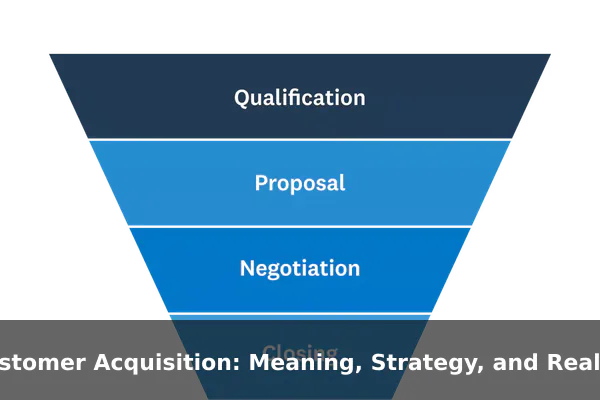
Customer acquisition is one of those business terms that sounds simple until a company tries to scale it. Getting new customers is obviously important, but the real challenge is not just bringing people in. The challenge is bringing in the right customers at a cost the business can afford, through a process that can be repeated without breaking margins.
That is why customer acquisition matters far beyond marketing alone. It affects revenue growth, cash flow, pricing, sales planning, hiring, and even product decisions. A company can have strong traffic, active social channels, and plenty of leads, yet still struggle if those efforts do not turn into profitable customer relationships.
This article explains customer acquisition in practical business terms. You will see what customer acquisition actually means, how it differs from related concepts, what an effective acquisition strategy looks like, which channels are most commonly used, and what the real costs are once you look beyond ad spend. The goal is not just to help you get more customers, but to understand how to acquire them in a way that supports sustainable growth.
What Customer Acquisition Actually Means
Customer acquisition is the process of turning a person or organization that has never bought from you into a paying customer. In the simplest sense, it is how a business creates new revenue from new buyers. But in practice, customer acquisition is not a single action. It is a system made up of targeting, messaging, channels, conversion points, sales activity, and post-click experience.
Acquisition is a business outcome, not just a marketing task
Many people use customer acquisition as if it means running ads or getting website visitors. That is too narrow. Ads, SEO, content, email, referrals, and outbound outreach are all possible acquisition tools, but acquisition itself is the outcome: a new customer says yes, pays, and enters the business relationship.
This distinction matters because a campaign can perform well at the attention stage while failing at the customer stage. A social campaign may generate cheap clicks. A webinar may collect leads. A landing page may capture contact details. None of that guarantees acquisition. Until the lead becomes a paying customer, the acquisition process is incomplete.
Customer acquisition is different from lead generation and retention
Customer acquisition overlaps with several other marketing and sales concepts, but it is not identical to them.
- Lead generation is about attracting interest and collecting potential buyers.
- Conversion is about getting a prospect to take a desired action, such as booking a demo or making a purchase.
- Customer acquisition is about creating a new paying customer.
- Customer retention is about keeping that customer active and valuable over time.
Understanding these differences helps businesses diagnose problems more accurately. If traffic is healthy but sales are weak, the problem may not be awareness. If lead volume looks strong but customer count stays flat, the gap may be in qualification, offer design, or follow-up. If acquisition looks profitable on day one but customers churn quickly, the real issue may sit in retention rather than top-of-funnel marketing.
Where acquisition fits in the customer journey
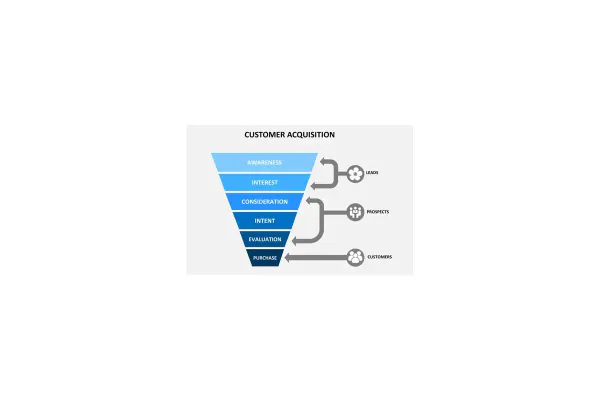
Customer acquisition usually sits between awareness and long-term loyalty. A typical journey looks like this:
- A potential buyer becomes aware of a problem or need.
- They discover possible solutions and compare options.
- They interact with your brand through content, ads, referrals, search, or sales conversations.
- They take one or more conversion steps.
- They make a first purchase or sign a contract.
That final step is what turns attention into acquisition. In business-to-consumer companies, this may happen quickly through an online checkout. In business-to-business companies, it may involve demos, consultations, pricing discussions, and a longer buying cycle. The structure changes, but the definition stays the same: customer acquisition ends when a new customer is won.
Why Customer Acquisition Matters to Business Growth
Customer acquisition is not just a marketing metric. It is one of the clearest indicators of whether a company has a viable path to growth. If a business cannot consistently acquire customers, it becomes too dependent on luck, existing relationships, or a shrinking base of repeat buyers.
It creates the revenue engine for future growth
Every business needs a flow of new customers. Even strong brands with loyal audiences lose some customers over time due to changing budgets, priorities, competition, or life circumstances. New acquisition replaces that natural loss and gives the company room to expand beyond its current base.
For a startup, acquisition proves market demand. For a mature company, it protects market share and opens new segments. For a small business, it creates stability by reducing dependence on a few repeat buyers. In every case, acquisition is what keeps revenue from standing still.
It shapes cash flow and decision-making
Acquisition affects how fast money goes out and how fast money comes back. If customer acquisition is expensive and slow to pay back, growth can put pressure on cash flow even when revenue appears healthy. This is one reason some companies grow in sales but still struggle financially. They invest too much in winning customers whose value arrives too late.
That is why acquisition decisions influence more than campaign budgets. They affect hiring plans, sales targets, pricing models, inventory planning, and expansion timing. When acquisition costs rise, leadership may need to rethink channel mix, offers, or sales processes before scaling further.
It determines whether growth is high quality or fragile
Not all growth is equally valuable. A company can acquire customers quickly through heavy discounts, broad targeting, or aggressive paid media, yet end up with low-margin buyers who never return. On paper, customer counts go up. In reality, the business becomes more fragile.
Strong acquisition does more than maximize volume. It brings in customers who fit the offer, convert for the right reasons, and have a realistic chance of becoming profitable over time. That is why the best acquisition strategies balance three things at once:
- Volume: enough new customers to support growth goals.
- Efficiency: acceptable cost relative to revenue and margin.
- Quality: customers who match the product, stay longer, or buy more.
When those three factors are aligned, acquisition becomes a reliable growth engine instead of a constant budget fight.
Core Elements of an Effective Acquisition Strategy
An acquisition strategy is not a list of channels. It is a coordinated plan for how a business will attract, convert, and profitably win new customers. The strongest strategies are built from clear assumptions about audience, value, economics, and execution.
Start with the right audience, not the biggest one
One of the most expensive acquisition mistakes is trying to sell to everyone. Broad reach may look appealing, but weak targeting usually creates poor message fit, lower conversion rates, and higher costs. Effective acquisition starts by defining who should be acquired first.
That usually includes questions such as:
- Who has the problem your product solves most urgently?
- Who has the budget or willingness to pay?
- What triggers them to look for a solution now?
- What objections slow down the decision?
- What alternatives are they already using?
For a small business, this might mean focusing on one customer segment instead of three. For a software company, it might mean choosing a specific industry or team size. For an ecommerce brand, it might mean prioritizing buyers with repeat-purchase potential rather than one-time bargain hunters.
Clarify the value proposition and offer
Once the audience is clear, the business needs an offer that matches both the problem and the buying stage. A value proposition explains why your solution is worth choosing. The offer makes that value actionable. It could be a free trial, a consultation, a starter package, a demo, a low-risk first order, or a limited-time bundle.
Strong acquisition messaging answers basic buyer questions quickly:
- What is this?
- Who is it for?
- Why is it better or more relevant than alternatives?
- What result should I expect?
- What should I do next?
When those answers are vague, acquisition costs rise because the market has to work harder to understand the promise.
Design the conversion path before scaling traffic
Traffic alone rarely fixes an acquisition problem. Before increasing spend, businesses need a clear path from first touch to purchase. That path may include ads, search results, landing pages, product pages, forms, demo booking, email sequences, sales calls, checkout flow, and onboarding.
Each step should reduce friction rather than add it. If the path is confusing, slow, or inconsistent, more traffic just means more wasted budget. This is why high-performing acquisition teams treat landing pages, messaging, and conversion flows as seriously as media buying.
Choose channels based on buying behavior, not trends
An effective strategy selects channels according to where the target customer pays attention and how they prefer to buy. A local service business may benefit from search and referrals. A B2B company may need content, outbound outreach, and demos. A consumer brand may rely on paid social, creator partnerships, and lifecycle email.
The key is fit. The best channel is not the newest one or the cheapest click source. It is the one that can repeatedly bring qualified buyers into a conversion path that works.
Build acquisition around testable assumptions
Good strategy is measurable. Instead of saying, We need more customers, a better acquisition plan sounds like this: We believe mid-sized companies in a specific industry will respond to a savings-focused message through search ads and demo pages, and we expect that traffic to convert into qualified sales conversations at a profitable cost.
That approach creates something useful: a hypothesis. Hypotheses can be tested, improved, or rejected. Without them, acquisition becomes guesswork hidden behind activity.
Most Common Customer Acquisition Channels
Most businesses do not rely on a single acquisition channel forever. They usually build a portfolio. The right mix depends on budget, buying cycle, competition, and how much demand already exists in the market. Instead of viewing channels as isolated tactics, it helps to group them by the type of demand they capture or create.
Intent-driven channels
These channels work best when people are already looking for a solution.
- Organic search attracts people actively researching answers, providers, or products.
- Paid search captures demand quickly by placing targeted offers in front of high-intent queries.
- Marketplace listings can work when buyers compare options on directory or product platforms.
Intent-driven channels often convert well because the buyer has already identified a need. The challenge is competition. Valuable search terms are rarely ignored by rivals.
Attention-driven channels
These channels interrupt or influence people before they are actively shopping.
- Paid social helps businesses reach specific audiences based on interests, behavior, or demographics.
- Display advertising supports awareness, retargeting, and repeated exposure.
- Video campaigns can create demand by demonstrating a problem, outcome, or brand promise.
These channels are useful when the market needs education or when the product solves a problem customers do not search for directly. They often require stronger creative, clearer positioning, and more follow-up because intent starts lower.
Trust-based channels
Some of the best acquisitions happen when trust is transferred from another source.
- Referrals work because existing customers or partners reduce perceived risk.
- Affiliate or partner programs allow outside parties to introduce qualified buyers.
- Influencers, creators, or industry experts can accelerate awareness when their audience already trusts their recommendations.
Trust-based acquisition often delivers better conversion quality than cold traffic, but it depends on credibility and alignment. A mismatched partnership may generate attention without meaningful sales.
Owned and relationship channels
These channels become stronger over time because the business controls the audience relationship.
- Content marketing builds discoverability and trust through useful information.
- Email marketing helps convert leads who need more time, proof, or reminders.
- Community building creates repeat exposure and stronger brand preference.
- Product-led acquisition allows the product experience itself to drive new signups or word-of-mouth growth.
These channels can be slower at the beginning, but they often improve efficiency over time because they create assets the company owns rather than rents.
Outbound and direct acquisition
In some markets, especially B2B, waiting for buyers to come to you is too passive. Outbound acquisition includes direct email, phone outreach, account-based campaigns, and targeted prospecting. It is most useful when the potential customer pool is identifiable and valuable enough to justify human effort.
The most important point is that no channel should be judged only by reach or cost per click. A channel is valuable when it fits the audience, the buying journey, and the business model.
The Real Costs Behind Customer Acquisition
Customer acquisition is often discussed as if the only cost is advertising spend. In reality, the cost structure is much broader. That is why businesses sometimes think they are acquiring customers cheaply when they are actually undercounting the full investment required.
What customer acquisition cost means
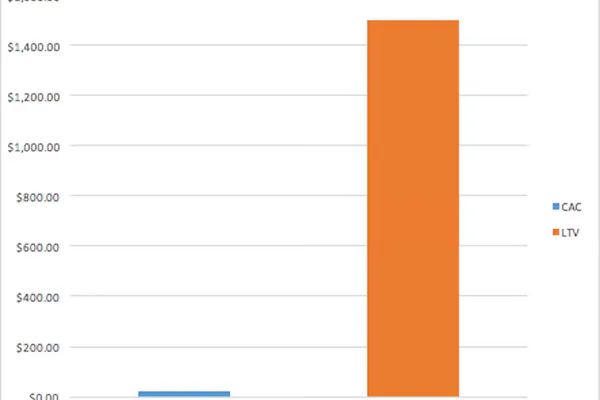
Customer acquisition cost, or CAC, is the total amount spent to acquire new customers over a given period, divided by the number of new customers acquired in that same period.
CAC = total acquisition spend / number of new customers acquired
If a company spends $20,000 on marketing, sales support, tools, creative production, and commissions tied to acquisition, and wins 100 new customers, its CAC is $200.
The formula is simple. The difficult part is defining total acquisition spend honestly.
Direct costs are only the beginning
Direct acquisition costs are the easiest to see because they usually appear in campaign reports or invoices. These often include:
- Ad spend on search, social, display, or marketplaces
- Agency or freelancer fees
- Sales commissions tied to new deals
- Landing page or creative production costs
- Promotional discounts used to win first-time buyers
These numbers matter, but they do not tell the whole story on their own.
Hidden costs are what distort acquisition math
Many businesses underestimate CAC because they ignore costs that are less visible but still necessary. Hidden or indirect acquisition costs may include:
- Marketing and sales salaries
- Software subscriptions for analytics, email, CRM, or automation
- Time spent building campaigns, writing content, and testing offers
- Design and development work for conversion pages
- Failed experiments and budget wasted on weak targeting
- Customer success or onboarding work needed to secure the first payment
These costs are real even if they are not attached to a single ad set. If they are required to turn prospects into customers, they belong in the broader acquisition picture.
Cheap traffic can still produce expensive customers
One of the most common misunderstandings in marketing is assuming that cheaper traffic means cheaper acquisition. That is not always true. A low-cost traffic source can still produce expensive customers if the conversion rate is poor, the audience quality is weak, or the average order value is too low.
Consider a simple comparison. Channel A brings clicks at a low price but converts only a small fraction of visitors into customers. Channel B has higher click costs but attracts people with stronger purchase intent and better close rates. Channel B may produce a higher cost per click but a lower cost per acquired customer.
This is why acquisition decisions should be made at the customer level, not the traffic level. Clicks are inputs. Customers are outcomes.
Real cost also includes time to recover spend
A customer may look affordable in theory, but timing still matters. If it takes twelve months to earn back the cost of acquisition, the company needs enough cash to carry that delay. If it takes thirty days, scaling becomes much easier.
That is why serious acquisition planning looks at both cost and recovery speed. The business is not only asking, How much does a customer cost? It is also asking, How long does it take before this customer becomes economically healthy?
How to Measure Acquisition Performance
Measuring acquisition performance does not require an overly complex dashboard, but it does require choosing metrics that reflect business reality. Vanity metrics such as impressions, followers, or raw traffic can be useful context, but they are not enough to judge acquisition quality.
Start with the metrics closest to business impact
The most useful acquisition metrics usually include:
- CAC: how much it costs to win each new customer.
- Conversion rate: the percentage of people who move from one stage to the next.
- Customer lifetime value: the expected revenue or margin a customer generates over time.
- LTV-to-CAC ratio: whether long-term value meaningfully exceeds acquisition cost.
- Payback period: how long it takes to recover the acquisition investment.
- Return on ad spend: how efficiently ad spend generates revenue, especially in paid channels.
These metrics tell a more complete story together than any one metric does alone. A channel with great ROAS might still produce low-value customers. A channel with a healthy CAC might still be too slow if payback takes too long.
Track performance by channel, audience, and offer
Acquisition is easiest to improve when performance is broken down into meaningful segments. Instead of evaluating results in one large average, look at how outcomes change by channel, campaign type, audience segment, offer, landing page, and sales path.
This matters because averages can hide real opportunities. One audience may convert at twice the rate of another. One message may reduce sales objections. One landing page may produce better quality leads even with lower volume. Segmentation turns measurement into decision-making.
Connect front-end metrics to back-end quality
Many acquisition programs fail because they measure the first conversion event but ignore what happens after. For example, a campaign may generate many trial signups, but if very few of those users become paying customers, acquisition quality is weak. A lead source may produce many booked calls, but if close rates are low, the cost of real acquisition is higher than it first appears.
That is why businesses should follow the customer path beyond the first click or form completion. At minimum, measurement should connect spend to:
- Qualified leads or opportunities
- New paying customers
- Revenue by channel
- Retention or repeat purchase behavior
Without that connection, optimization tends to favor what is easy to count rather than what is actually profitable.
Use simple review questions regularly
A practical acquisition review can be built around a few recurring questions:
- Which channels are producing new customers at an acceptable CAC?
- Which audience segments convert best after the initial click?
- Where is the biggest drop-off in the journey?
- How fast is acquisition spend being recovered?
- Which campaigns create customer value, not just lead volume?
Those questions keep the focus on outcomes instead of activity.
Ways to Lower Acquisition Cost Without Hurting Quality
Lowering acquisition cost is not about squeezing every channel until quality collapses. The goal is to improve efficiency while protecting fit, trust, and conversion quality. In many cases, the biggest wins come from refining the system rather than simply cutting spend.
Improve conversion before increasing reach
If a landing page, product page, checkout flow, or sales script is underperforming, adding more traffic will amplify waste. One of the fastest ways to reduce CAC is to improve the conversion rate of existing traffic.
That can involve:
- Clearer headlines and stronger positioning
- Better proof, such as testimonials, results, or case examples
- Simpler forms or shorter checkout paths
- Stronger call-to-action wording
- Closer message match between ad, page, and offer
Even a modest conversion lift can significantly lower acquisition cost because the same spend produces more customers.
Tighten targeting and qualification
Broad targeting often looks efficient at the top of the funnel but becomes expensive later. Better targeting improves both conversion quality and sales efficiency. In B2B, this may mean qualifying by company size, industry, or buying role. In B2C, it may mean focusing on behaviors or purchase intent rather than broad interest categories.
Qualification also matters after the click. Strong forms, better lead questions, or clearer pricing expectations can prevent low-fit prospects from consuming time and budget.
Strengthen the offer, not just the promotion
Some businesses respond to weak acquisition by increasing discounts. That can create short-term volume but damage margins and attract price-sensitive buyers. A better approach is to strengthen the offer itself. Add clarity, risk reduction, faster onboarding, stronger guarantees, or more visible outcomes. When the offer feels more compelling, conversion can improve without relying entirely on price cuts.
Use retention insights to improve acquisition
One of the smartest ways to reduce CAC is to learn from the customers who stay, buy again, or refer others. Those customers reveal which segments, messages, and use cases lead to higher lifetime value. That information can then shape future targeting and creative.
In other words, retention data helps acquisition become more selective. Instead of asking only who clicks, the business starts asking who becomes valuable over time.
Invest in compounding channels
Some acquisition efforts become more efficient as they mature. Search content, referral systems, brand authority, email lists, and partner relationships can continue producing customers after the initial investment. They may not replace paid acquisition entirely, but they reduce dependence on constantly buying attention.
A balanced strategy usually combines fast channels and compounding channels. The first creates short-term momentum. The second improves efficiency over time.
Mistakes That Make Acquisition More Expensive
Customer acquisition becomes costly when businesses optimize the wrong things, move too fast, or fail to connect marketing activity with customer economics. The following mistakes are especially common.
Scaling before the unit economics work
It is tempting to increase budget as soon as a campaign shows signs of life. But early traction is not the same as a proven acquisition model. If conversion quality, payback, or customer value are still unclear, scaling can multiply losses faster than wins.
A better approach is to validate the basics first: audience fit, offer strength, conversion path, and realistic CAC. Growth should follow evidence, not excitement.
Chasing vanity metrics instead of customer outcomes
High impressions, low click costs, and rising lead counts can create false confidence. If those numbers do not translate into customers, they are not proof of healthy acquisition. The more teams celebrate front-end metrics alone, the more likely they are to miss deeper performance problems.
Ignoring attribution limits
Attribution is useful, but it is never perfect. Buyers often interact with multiple touchpoints before converting. They may discover a company through content, return through search, join an email list, and purchase after a direct visit or sales call. If a business gives all credit to the final touchpoint, it may underinvest in the channels that created demand earlier.
The point is not to avoid attribution. It is to use it with realism. Acquisition decisions should consider the full buyer journey, not just the easiest click to measure.
Treating acquisition as separate from product and sales
Acquisition often gets blamed for problems it did not create. Poor onboarding can hurt first-purchase conversion. Weak product positioning can reduce close rates. Slow sales follow-up can waste qualified demand. If teams operate in silos, CAC rises because friction compounds across departments.
The strongest acquisition programs are cross-functional. Marketing attracts attention, sales handles intent efficiently, product supports the promise, and customer success helps early value arrive quickly.
Using one message for every audience
Different buyers respond to different motivations. Some care most about price. Others care about speed, reliability, prestige, or risk reduction. When a business uses one generic message across all segments, conversion usually suffers. More precise messaging often lowers CAC because the market understands the relevance faster.
Customer Acquisition Is a Growth System, Not Just a Campaign
Customer acquisition is best understood as a complete growth system. It includes how a business defines its audience, communicates value, chooses channels, builds trust, removes friction, and measures profitability. It is not limited to advertising, and it should never be judged by traffic alone.
The businesses that acquire customers most effectively are usually not the ones that shout the loudest. They are the ones that understand the economics behind each new customer, invest in the right channels for their market, and keep improving the path from first contact to first payment. They know that growth is only healthy when acquisition cost, customer value, and recovery time make sense together.
If there is one principle to remember, it is this: customer acquisition should create customers the business can afford to keep serving profitably. Once that principle guides strategy, tactics become easier to evaluate, budgets become easier to defend, and growth becomes much more sustainable.
