
Many marketing efforts focus heavily on getting attention, generating clicks, and collecting leads. That part matters, but it is only the beginning. In most industries, a person who downloads a guide, signs up for a newsletter, or requests a demo is not automatically ready to buy. They may still be comparing options, defining their problem, building internal approval, or simply waiting until the timing feels right. Lead nurturing is the process that bridges that gap between early interest and confident action.
In practical terms, lead nurturing helps businesses stay relevant after the first interaction. Instead of pushing for an immediate sale, it delivers useful information, timely follow-up, and personalized communication that moves prospects closer to a decision. That makes it one of the most important parts of a modern marketing system. A strong lead nurturing strategy can improve trust, raise conversion rates, support sales teams, and increase long-term customer value. This article explains how lead nurturing works, why it matters in marketing, and how to build a process that turns more interest into real business results.
What Lead Nurturing Means in Modern Marketing
Lead nurturing is a structured marketing process designed to build relationships with potential customers before they are ready to buy. It combines communication, content, timing, and behavioral insights to guide people through the buyer journey. The goal is not to pressure a lead into a rushed decision. The goal is to help that person make progress, reduce uncertainty, and eventually become a qualified opportunity or customer.
Lead nurturing is different from direct selling
Direct selling often assumes the prospect is ready for a strong pitch right now. Lead nurturing takes a different approach. It recognizes that people move at different speeds, ask different questions, and need different types of proof before they commit. A new lead might need educational content. A returning visitor might need a case study. A product-trial user might need onboarding help and a comparison guide. Effective nurturing matches the message to the moment.
This is especially important in markets with longer decision cycles, higher prices, or more stakeholders. A business software buyer, for example, may need to involve finance, operations, and management before approving a purchase. A service client may need to compare several providers before booking a consultation. In both cases, lead nurturing keeps the conversation alive while the decision develops.
Lead nurturing follows the buyer journey
The buyer journey rarely moves in a straight line. People discover a problem, research possible solutions, evaluate alternatives, and then decide whether to buy. Some go faster than expected. Others pause for weeks. Marketing teams that understand this behavior do not treat every lead the same way. They create a system that supports leads at each stage.
- Early-stage leads often need awareness content such as guides, checklists, and educational articles.
- Mid-stage leads usually need deeper explanation, comparison content, and practical examples.
- Late-stage leads often respond better to demos, pricing clarity, testimonials, and direct conversations.
That is why lead nurturing matters so much in marketing. It is the operational layer that turns raw attention into meaningful progression. Without it, many leads go cold not because they were bad leads, but because no one helped them take the next step.
How Lead Nurturing Works Step by Step
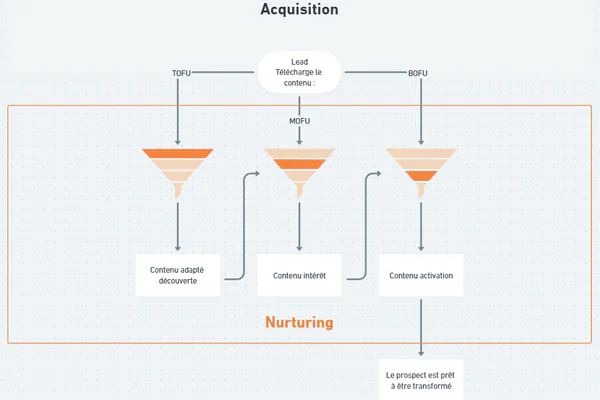
The lead nurturing process is not a single email or a generic follow-up message. It is a sequence of actions that helps marketers understand a lead, respond to signals, and guide that person toward a conversion. While the exact setup varies by business model, the process usually follows a clear pattern.
1. Capture the lead and the context
Lead nurturing starts the moment a person shares contact information or shows measurable interest. That might happen through a newsletter signup, a downloadable resource, a webinar registration, a quote request, or a free trial. At that point, the business should capture not only the lead’s contact details but also the context of the interaction.
Context matters because it shapes follow-up. If someone downloaded a beginner guide, they may still be exploring the topic. If they requested pricing, they are likely further along. If they visited a product page multiple times, that behavior may signal stronger intent than a casual blog reader.
2. Segment the lead by fit and intent
Once a lead enters the system, the next step is segmentation. This means grouping leads based on meaningful differences so the business can send more relevant communication. Segmentation may include:
- Industry or business type
- Company size or budget level
- Geographic location
- Product interest
- Lifecycle stage
- Behavior such as clicks, page visits, or repeat engagement
A good lead nurturing strategy usually looks at two dimensions at the same time: fit and intent. Fit asks whether the lead matches the ideal customer profile. Intent asks whether the lead is showing signs of buying soon. A lead with high fit but low intent may need patient education. A lead with high fit and high intent may be ready for a faster sales conversation.
3. Deliver useful follow-up content
After segmentation, the nurturing sequence begins. This is where marketing teams send content and messages that help the lead move forward. The content should answer likely questions, reduce friction, and show why the business is credible. This often happens through email, but it can also involve retargeting ads, SMS, social content, and sales outreach.
The key is relevance. A nurturing email should not feel like mass promotion. It should feel like the next helpful step. For example, a business might send:
- An explainer article after a newsletter signup
- A case study after a product comparison page visit
- A checklist after a webinar attendance
- A trial onboarding sequence after account creation
- A consultation invitation after repeated high-intent actions
4. Watch behavior and adjust the path
Lead nurturing works best when it responds to behavior instead of running on fixed assumptions. If a lead opens every email but never clicks, the message may be interesting but not persuasive enough. If a lead suddenly visits the pricing page three times, that is a stronger buying signal than an old content download. Good nurturing systems use behavior to change the next step.
This is where automation becomes valuable. Marketing automation tools can trigger different messages based on activity, such as:
- Sending a follow-up email after a resource download
- Pausing promotion after a demo request
- Moving a lead into a high-intent sequence after repeated product-page visits
- Alerting sales when engagement crosses a certain threshold
Automation improves consistency, but the strategy still has to be human. If the logic is weak, automation only scales irrelevant communication.
5. Hand off sales-ready leads at the right time
Not every lead should go to the sales team immediately. Sending cold or unqualified leads too early wastes time and creates friction between marketing and sales. A stronger approach is to define what sales-ready means. That may include a combination of demographic fit, engagement level, and intent signals.
For example, a lead may become sales-ready after they:
- Match the target customer profile
- Engage with multiple high-value pieces of content
- Visit solution or pricing pages
- Request a call, demo, or proposal
At that point, nurturing shifts from broad education to direct sales conversation. The handoff should include useful context so sales does not start from zero. If the representative knows what content the lead consumed and which pain points they explored, the conversation becomes more relevant and more likely to convert.
6. Continue nurturing after the first conversion
Lead nurturing does not always end at the first sale. In many businesses, post-purchase communication helps customers adopt the product, expand usage, renew subscriptions, and recommend the brand to others. This makes nurturing valuable not only for conversion, but also for retention and growth.
Why Businesses Benefit From Nurturing Leads
Lead nurturing improves marketing performance because it helps businesses do more with the leads they already have. Instead of relying only on top-of-funnel acquisition, companies can increase the value of existing interest. That changes the economics of growth in a meaningful way.
It increases conversion efficiency
Many businesses spend heavily to generate leads, then lose momentum after the initial interaction. Lead nurturing helps recover that missed value. When prospects receive useful follow-up at the right time, more of them move toward action. That often means better conversion rates without increasing advertising spend at the same pace.
In other words, nurturing can raise the return on lead generation. If traffic and form submissions are already coming in, a better follow-up process may produce more revenue from the same acquisition effort.
It builds trust before the buying decision
Trust is rarely created by one message. It grows through repeated evidence. Educational content, customer stories, clear explanations, and timely responses all reduce risk in the mind of the buyer. This is one reason lead nurturing matters so much in competitive markets. When products look similar, the buying decision often comes down to clarity, confidence, and credibility.
It helps sales teams focus on stronger opportunities
When marketing nurtures leads well, sales teams spend less time chasing people who are not ready. Instead, they receive leads with more context, higher engagement, and clearer intent. That can improve response quality, shorten sales conversations, and increase win rates.
This alignment is especially important in B2B environments, service businesses, and high-consideration purchases. In those settings, sales efficiency depends heavily on timing.
It supports long-term customer value
Lead nurturing is often discussed as a pre-sale tactic, but its long-term impact is broader. A well-nurtured lead enters the customer relationship with better expectations, stronger understanding, and more confidence in the brand. That can contribute to:
- Better onboarding and adoption
- Higher retention
- More upsell or cross-sell opportunities
- More referrals and word-of-mouth growth
For many businesses, the true value of nurturing is not only the first conversion. It is the quality of the relationship that follows.
The Core Elements of an Effective Lead Nurturing Strategy
A lead nurturing strategy succeeds when the system is built around relevance, timing, and buyer progression. A business does not need a complex enterprise stack to do this well, but it does need a disciplined structure.
Audience segmentation
Segmentation is the foundation. Without it, businesses send the same message to everyone and hope for the best. That usually leads to lower engagement because different leads have different motivations. A startup founder evaluating software does not think like an enterprise manager. A first-time buyer does not have the same concerns as a returning lead who already knows the category.
Useful segmentation can be simple at first. Even basic groups such as new subscribers, product-interested leads, demo requesters, and inactive contacts can improve results. Over time, businesses can add more refined layers based on behavior and fit.
Personalized messaging
Personalization does not mean inserting a first name into an email subject line and calling it strategy. Strong personalization means adjusting the message based on what the lead actually needs. That includes topic selection, examples, call to action, and level of detail.
Good personalized nurturing sounds informed, not invasive. It shows the business understands the prospect’s likely questions and can answer them clearly.
Cadence and timing
Even useful content can fail if it arrives at the wrong pace. Too many messages create fatigue. Too few messages cause people to forget the brand. Effective lead nurturing uses a cadence that matches urgency and intent.
A high-intent demo request may justify faster follow-up. A new subscriber who downloaded an educational resource may need a slower sequence. Timing should reflect both the customer’s likely decision cycle and the importance of the action they took.
Content mapped to decision stage
Different stages require different content. Businesses often make the mistake of sending conversion-focused messages too early. If a lead is still defining the problem, a hard sales pitch creates friction. If a lead is already evaluating vendors, a generic awareness article may feel irrelevant.
Strong nurture content often includes:
- Educational articles and guides for early-stage awareness
- Comparison content and webinars for mid-stage evaluation
- Case studies, product walkthroughs, and consultations for late-stage decision-making
Clear marketing and sales alignment
Lead nurturing breaks down when marketing and sales use different definitions of quality. Marketing may think a lead is warm because they opened emails. Sales may disagree because no buying signal is visible. The fix is shared criteria. Teams should agree on what counts as engagement, what qualifies as sales-ready, and what information should accompany a handoff.
That alignment prevents wasted effort and creates a smoother experience for the prospect.
Lead Nurturing Channels and Content That Actually Work
The best lead nurturing campaigns are rarely built on a single channel. People interact with brands in different places, and each channel has a different role. The goal is not to be everywhere. It is to use the right combination of channels for the audience and buying process.
Email remains the core channel
Email is still one of the most effective lead nurturing tools because it gives marketers direct, owned communication. It works well for sequenced education, behavioral follow-up, product onboarding, and re-engagement. A strong nurture email usually has one clear objective, a specific audience, and a relevant next step.
Effective email nurture content may include:
- Welcome sequences
- Educational series
- Product education messages
- Case studies and testimonials
- Event invitations
- Re-engagement emails for inactive leads
Retargeting supports memory and momentum
Retargeting can reinforce messages for leads who visited key pages but did not convert. It works well when used with restraint and message consistency. For example, someone who read a service page may later see an ad featuring a client result or a short explainer video. That repeated exposure can help keep the brand top of mind during a longer decision cycle.
Sales outreach matters for high-intent leads
In complex or higher-value purchases, nurturing should include direct human follow-up at the right moment. A thoughtful sales email, a discovery call invitation, or a tailored answer to a question can move a lead much faster than another automated message. The timing matters. Human outreach should feel like a natural next step, not an interruption.
Social media and SMS can play support roles
Social media helps reinforce brand credibility, share educational content, and keep leads connected to the business between direct touchpoints. SMS can work for appointment reminders, event confirmations, or urgent follow-up when the audience expects it. Neither channel should replace strategy, but both can strengthen a broader nurture workflow when used carefully.
Content formats should match buying questions
Different content formats answer different buying questions. Instead of asking which format is best in general, ask which format reduces uncertainty at a given stage. Useful options include:
- Articles and guides for education and problem awareness
- Checklists and templates for practical next steps
- Case studies for proof and credibility
- Webinars and demos for deeper understanding
- FAQs and comparison pages for decision-stage clarity
The strongest campaigns do not just send content. They send the next most useful content.
Common Lead Nurturing Mistakes to Avoid
Even businesses with strong products often underperform because their lead nurturing process has avoidable flaws. The most common mistakes usually come from treating nurturing as a tool problem instead of a strategy problem.
- Sending generic messages to every lead. When everyone receives the same follow-up, relevance drops and engagement usually follows.
- Following up too aggressively. High message volume can create fatigue, unsubscribes, and weaker brand perception.
- Following up too slowly. If a lead shows interest and hears nothing for days or weeks, momentum disappears.
- Ignoring behavioral signals. Businesses that do not react to pricing-page visits, webinar attendance, or repeated engagement miss valuable intent data.
- Using automation without strategy. Automation is useful, but a poorly designed sequence only scales weak communication.
- Focusing only on the sale. If every message asks for a commitment, the lead gets little value before the decision.
- Failing to align with sales. When marketing and sales disagree on lead quality, handoffs become inefficient and follow-up becomes inconsistent.
A good rule is simple: if the nurturing sequence feels self-centered, repetitive, or disconnected from the buyer’s actual questions, it needs improvement.
How to Measure Whether Lead Nurturing Is Working
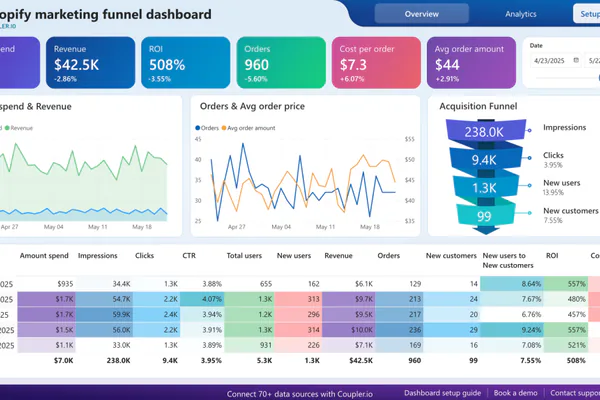
Lead nurturing should be measured as a progression system, not just a content distribution exercise. The right metrics help marketers understand whether leads are moving closer to revenue, not merely consuming messages.
Track engagement metrics first
Engagement metrics show whether the audience is paying attention. These can include:
- Email open rates
- Click-through rates
- Landing-page visits from nurture campaigns
- Time spent on key content
- Webinar registrations or attendance
- Reply rates on direct outreach
These numbers are useful, but they are only the first layer. A high open rate does not guarantee pipeline growth. It simply shows whether the message is earning attention.
Measure movement toward sales readiness
The next layer is progression. Are leads becoming more qualified over time? Useful indicators include:
- Lead-to-opportunity conversion rate
- Marketing-qualified lead volume
- Sales-accepted lead rate
- Demo requests or consultation bookings from nurture sequences
- Number of high-intent actions per lead
These metrics show whether nurturing is doing its real job: preparing leads for meaningful conversations and decisions.
Connect nurturing to pipeline and revenue
Ultimately, the most important question is whether lead nurturing contributes to business outcomes. That means looking at:
- Lead-to-customer conversion rate
- Sales cycle length
- Revenue influenced by nurture campaigns
- Customer acquisition efficiency
- Retention or expansion from post-sale nurture flows
When businesses measure only top-level engagement, they may optimize for clicks instead of conversions. A better measurement model connects early activity to later revenue impact.
Use diagnostics, not just dashboards
Measurement should lead to decisions. If click-through rates are low, the offer may be weak. If many leads engage but few become sales-ready, the content may educate without creating urgency. If sales rejects nurtured leads, the qualification rules may need revision. Metrics matter most when they help refine the process.
Simple Ways to Improve Your Lead Nurturing Process
Businesses do not need to rebuild everything at once to improve lead nurturing. Small, disciplined upgrades often create strong gains. The best improvements usually come from better relevance, clearer sequencing, and stronger coordination.
Start with one clear journey
Instead of trying to automate every possible scenario, begin with one high-value nurture path. That might be:
- A welcome sequence for new subscribers
- A follow-up series for demo requests
- A re-engagement campaign for inactive leads
- An onboarding sequence for trial users
One strong workflow is more valuable than five weak ones.
Map content to real buying questions
Review your current content and ask what question each piece answers. If your nurture process contains a lot of content but little progression, the issue may be weak alignment. Every touchpoint should help the lead move from one stage to the next.
Use lead scoring carefully
Lead scoring can help prioritize follow-up, but it should reflect meaningful behavior rather than vanity actions. Opening one email should not equal requesting a consultation. Score signals according to intent and business value, then revisit the model as real results come in.
Test subject lines, offers, and timing
Improvement comes from testing, not guessing. Businesses should regularly compare:
- Email subject lines and preview text
- Calls to action
- Content formats
- Delay between messages
- Trigger points for sales outreach
Even small changes in timing or message framing can improve lead response.
Make the handoff to sales smoother
If sales is part of the conversion path, the handoff should be intentional. Share the lead’s source, behavior history, content engagement, and likely pain points. That reduces repetition and makes outreach more relevant. A lead should never feel like they have to restart the conversation from scratch.
Audit the process from the lead’s perspective
One of the simplest improvements is to review the entire nurture sequence as if you were the prospect. Ask:
- Does each message feel useful?
- Is the sequence too slow or too aggressive?
- Do the calls to action match the stage?
- Is there enough proof and clarity?
- Would this build confidence or create pressure?
Lead nurturing works best when the experience feels coherent, timely, and genuinely helpful.
Conclusion
Lead nurturing matters in marketing because attention alone does not create customers. Most leads need guidance, context, proof, and time before they are ready to act. A thoughtful nurturing process helps businesses meet that need with relevant content, smart timing, and better coordination between marketing and sales.
When done well, lead nurturing turns scattered follow-up into a repeatable growth system. It helps brands build trust, improve conversions, use acquisition budgets more efficiently, and create stronger customer relationships over time. For businesses that want more than just lead volume, lead nurturing is not optional support work. It is a core part of how modern marketing produces real results.
