
Every successful marketing campaign starts with one fundamental question: who exactly is the customer? Without a clear picture of the person you are trying to reach, your messaging becomes generic, your targeting becomes wasteful, and your conversions suffer. Customer personas solve this problem by turning broad audience assumptions into vivid, research-backed profiles that guide every marketing decision your team makes.
This guide explains what customer personas are, why they are essential in modern marketing, how they differ from a target audience, and how to build one from scratch — complete with real examples and a simple template you can use today.
What Is a Customer Persona?
A customer persona — also called a buyer persona or marketing persona — is a semi-fictional representation of your ideal customer, built from real data and research. It gives a face, a name, and a story to a specific segment of your audience so your team can think about that customer in concrete terms rather than vague statistics.
A persona is not a real individual. It is a composite sketch that reflects patterns found across many real customers. One business might have two or three personas representing its core customer segments, each with distinct needs, preferences, and motivations.
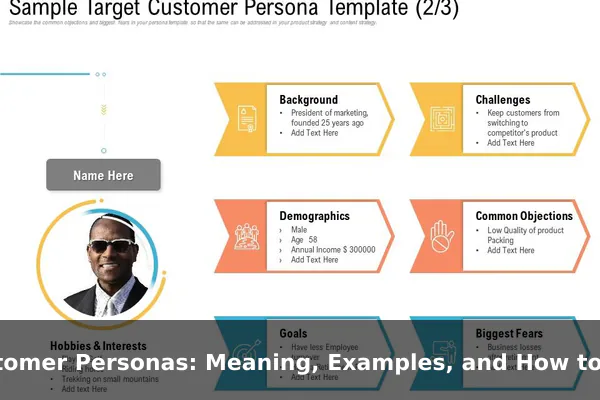
A typical customer persona includes:
- Name and photo — a fictional identity to humanize the profile
- Demographics — age, gender, income, education, and location
- Job and lifestyle — occupation, family situation, and daily routine
- Goals — what they are trying to achieve
- Pain points — challenges or frustrations they face
- Buying behavior — how they research, compare, and decide
- Preferred channels — where they spend time online and offline
Why Customer Personas Matter in Marketing
Personas are not just a creative exercise — they produce measurable improvements across marketing functions.
Better targeting and less wasted spend
When you know exactly who your ideal customer is, you can target ads more precisely, choose the right platforms, and avoid spending budget on audiences who will never buy from you.
Sharper messaging
A persona tells you what language your customer uses, what keeps them up at night, and what kind of promise will resonate most. That insight transforms generic copy into messages that feel personally relevant to the reader.
Smarter content planning
Content teams use personas to decide which topics to cover, which formats fit the audience, and which stage of the funnel each piece should serve. Without this, content becomes a guessing game.
Aligned product and sales decisions
Personas give product managers evidence for feature priorities and help sales teams anticipate objections before they arise in a live conversation.
Customer Persona vs. Target Audience
These two terms are often used interchangeably, but they serve different purposes and operate at different levels of detail.
A target audience is a broad segment defined by high-level characteristics — for example, women aged 25–40 who are interested in fitness. It answers the question: who could buy from us?
A customer persona is a detailed, humanized profile built from within that segment — Sarah, 34, a part-time nurse and mother of two who squeezes in 5 a.m. workouts because evenings belong to her kids, and who is frustrated that most fitness apps assume she has an hour to spare. It answers: who actually buys from us, and why?
The persona adds depth that makes real marketing action possible. It is the difference between knowing your audience exists and understanding how to talk to them in a way that converts.
Key Elements of a Strong Customer Persona
Not all persona fields carry equal weight. Focus on these core elements to build a profile that drives real decisions:
- Demographics — age, location, income, job title. These shape platform choice and tone of voice.
- Goals — primary and secondary outcomes the customer wants. These become your headline promises.
- Pain points — frustrations, obstacles, and unmet needs. These fuel your problem-focused messaging.
- Motivations — the deeper reason behind their goal, such as status, security, convenience, or savings. These inform your emotional appeals.
- Objections — reasons they might hesitate to buy. These shape your FAQ content, testimonials, and guarantees.
- Buying behavior — how long they research, who they trust, and what triggers a final decision.
- Preferred channels — Instagram, LinkedIn, email, Google Search. These determine where you invest your budget.
Customer Persona Examples
Here are two sample personas from different business contexts to show how the framework looks in practice and how it immediately suggests marketing actions.
Example 1: SaaS project management tool
Name: David, 35 | Role: Operations Manager at a 50-person tech startup
Goal: Keep remote teams aligned without spending hours chasing status updates in chat threads.
Pain points: Meetings that could be emails; tools the team does not actually adopt; reporting that takes too long to compile.
Preferred channels: LinkedIn, email newsletters, Google Search.
Key objection: “We already have too many tools.” — Address this with a strong integration story and a simplicity proof point.
Example 2: Online fitness program for parents
Name: Maria, 33 | Role: Part-time accountant, mother of two young children
Goal: Get back in shape without a fixed gym schedule or childcare costs.
Pain points: Limited time, unpredictable schedule, and guilt about prioritizing herself.
Preferred channels: Instagram, Facebook groups, YouTube.
Key objection: “I don’t have 45 minutes a day.” — Address this with 20-minute workout formats and a flexible scheduling feature.
Notice how each persona immediately suggests specific headlines, content angles, and ad targeting criteria. That practical pull is the entire value of building a persona the right way.
How to Build a Customer Persona Step by Step
Step 1: Collect real data first
Pull from sources you already have: CRM records, website analytics, past purchase data, customer support tickets, and email engagement stats. Look for patterns in who buys most often and who stays the longest.
Step 2: Interview real customers
Run five to ten short interviews with existing customers or warm prospects. Ask about their goals, frustrations, decision process, and what they wish your product did better. The exact words people use in interviews become your most powerful copywriting material.
Step 3: Survey your broader audience
A short five-question survey sent to your email list can surface patterns across hundreds of respondents quickly. Focus on one pain point, one primary goal, and one purchase-trigger question to keep responses focused and actionable.
Step 4: Find patterns and segment
Group similar responses together. Look for clusters — people who share the same goals, frustrations, and behaviors. Each cluster becomes the foundation for one persona profile.
Step 5: Draft the persona
Write the persona in narrative form first, then distill it into a one-page profile. Give it a name, a stock photo, and a short quote that captures the person’s core frustration in their own words.
Step 6: Validate with internal teams
Share the draft with your sales, customer success, and product teams. They interact with customers every day and will quickly spot anything that feels off. Refine based on their input before distributing the persona company-wide.
Common Mistakes to Avoid
- Building personas from guesswork. Assumptions without data produce profiles that reflect internal biases, not actual customers. Always anchor each element in a real data source.
- Making personas too broad. A persona that fits everyone fits no one. Be specific enough that the profile clearly excludes some types of people.
- Creating too many personas at once. Start with two or three. More than five usually indicates over-segmentation that is hard to act on in practice.
- Never updating them. Markets shift and motivations change. Review your personas at least once a year or after a major product launch.
- Forgetting negative personas. Defining who is not your customer saves budget by deliberately excluding audiences that consume support resources without converting.
How to Use Customer Personas in Real Marketing Work
A persona is only valuable if it is actually used. Here is how different teams can apply personas in their day-to-day work:
- Content teams: Use persona pain points to generate blog topics and match content format to preferred channels.
- Ad managers: Build audience segments in ad platforms that mirror persona demographics and stated interests.
- Email marketers: Segment email lists by persona and write subject lines that speak to each group’s specific goal rather than blasting the same message to everyone.
- Website designers: Use persona language in hero headlines and prioritize features that address the primary pain point above the fold.
- Sales teams: Use persona objection lists to prepare responses and tailor outreach messages before the first conversation.
- Product managers: Rank feature requests by how many personas they serve and how urgently each segment needs the improvement.
Simple Customer Persona Template
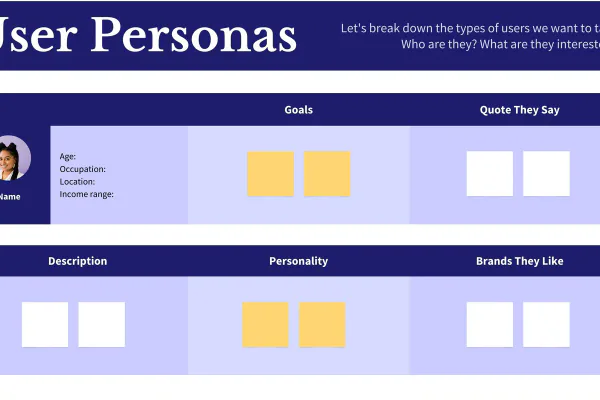
Use this fill-in structure to create your first persona quickly. Complete every field with real evidence, even if the evidence is limited at first:
- Name: [fictional first name]
- Age / Location / Job Title:
- Primary Goal: What do they most want to achieve?
- Biggest Pain Point: What frustrates or blocks them right now?
- Core Motivation: Why does this goal matter deeply to them?
- Main Objection: Why might they hesitate or delay buying?
- Preferred Channels: Where do they discover, research, and purchase?
- Key Quote: One sentence in their own words that captures their current situation.
Even a rough first draft built on real evidence outperforms a polished persona built entirely on assumptions. Start lean and sharpen the profile as you gather more data over time.
Final Takeaway
Customer personas turn abstract audience data into a practical reference that every team can use on a daily basis. When built from real research — interviews, surveys, and behavioral analytics — they sharpen messaging, reduce wasted spend, and help your entire organization stay focused on the same customer. The goal is not a perfect document but a living profile that keeps customer reality at the center of every marketing decision.
Start with one persona, interview five real customers, look for the patterns that repeat, and build the profile from what you find. Then put it in front of your team and watch how quickly it changes the way campaigns are planned, written, and measured.
