

Product marketing sits in a part of the business that many people recognize but few define clearly. It is often confused with general marketing, blended into product management, or reduced to launch campaigns alone. In practice, product marketing plays a more specific and more strategic role: it helps a company understand the market, define how a product should be positioned, explain why it matters to the right audience, and turn that clarity into revenue.
That makes product marketing especially important in crowded markets. A strong product does not automatically win because of its feature list. Buyers need context. Sales teams need sharper stories. Existing customers need a reason to adopt, upgrade, and stay. Product teams need insight into what the market values, what competitors are saying, and which messages actually move decisions. Product marketing connects all of that.
This article explains what product marketing really means, what product marketers do day to day, how the role differs from adjacent functions, what a practical strategy looks like, and what real brand examples can teach us. The goal is not to describe marketing in general, but to show how product marketing helps products find traction, create understanding, and stand out for the right reasons.
What Product Marketing Actually Means
Product marketing is the function responsible for bringing a product to market and keeping it relevant there. It focuses on the connection between the product, the customer, and the commercial outcome. In simple terms, product marketing answers a set of business-critical questions:
- Who is this product really for?
- What problem does it solve better than alternatives?
- How should it be positioned in the market?
- What messages will make buyers care?
- How will internal teams sell and support it effectively?
That definition matters because product marketing is not just about promotion. It is about market fit communication. The role shapes how the product is understood, how it is framed against competitors, and how teams inside the business stay aligned on its value.
Product Marketing Across the Product Lifecycle
Product marketing is active before, during, and after launch. Before launch, it gathers insight and helps shape positioning. During launch, it coordinates messaging, enablement, and go-to-market execution. After launch, it tracks adoption, message performance, market response, and customer feedback to improve results over time.
That means product marketing is not a one-time campaign. It is an ongoing discipline that adapts as the product matures, the audience changes, or competitors shift their claims.
Why Product Marketing Matters
Many businesses lose momentum not because the product is weak, but because the market story is unclear. Buyers may not understand the difference between one solution and another. Sales teams may rely on generic claims. Product teams may assume features speak for themselves. Product marketing reduces that friction by turning product capability into market relevance.
At its best, product marketing helps a business:
- Improve product launches
- Increase sales confidence and win rates
- Strengthen customer understanding
- Create sharper competitive differentiation
- Support adoption, expansion, and retention
What a Product Marketer Does Day to Day
The daily work of product marketing is broad, but it usually centers on clarity, alignment, and execution. Product marketers translate information across teams. They take customer language from research, product detail from internal teams, and revenue pressure from commercial leaders, then turn that into a practical market strategy.
Customer and Market Research
Product marketers spend significant time learning how customers think. That includes interviews, win-loss analysis, survey review, support feedback, and competitive monitoring. The goal is to understand not just what customers do, but how they describe their needs, what alternatives they compare, and what triggers action.
Useful research questions include:
- What problem feels urgent enough to solve now?
- What language do customers naturally use?
- What objections slow decisions?
- What makes a product seem risky or credible?
- Why do some customers choose competitors?
Positioning and Messaging
Once the insight is clear, product marketing develops positioning. Positioning defines the place a product should occupy in the customer’s mind. Messaging translates that position into words, claims, proof points, and narratives that different audiences can understand quickly.
This work often includes:
- Positioning statements
- Value proposition development
- Message hierarchy
- Buyer persona messaging
- Competitive battlecards
- Website and campaign input
Launch Planning and Go-to-Market Coordination
Product marketing usually leads or co-leads launch planning. That includes deciding the launch story, naming the target segments, selecting channels, supporting content creation, and making sure customer-facing teams are prepared. Launches often fail when teams are not aligned on timing, narrative, or audience priority. Product marketing reduces that risk.
Sales Enablement
A major part of the role is helping sales teams sell more effectively. Product marketers build the materials and training that help salespeople explain the product with confidence. That might include demos, objection handling, pitch decks, talk tracks, FAQs, and customer proof.
Without enablement, even strong messaging can stay trapped in strategy documents instead of influencing real buyer conversations.
Pricing and Packaging Input
Product marketers do not always own pricing, but they frequently contribute to it. Because they monitor customer perception and competitor framing, they can provide context on willingness to pay, feature packaging, upgrade logic, and value communication.
A product with excellent features can still struggle if pricing is confusing, packaging hides value, or tiers do not match real buyer needs.
How Product Marketing Differs From Product Management and Brand Marketing
One of the biggest sources of confusion is role overlap. Product marketing works closely with product management and brand marketing, but the focus of each function is different.
Product Marketing vs Product Management
Product management is primarily responsible for what gets built and why from a product development perspective. Product managers prioritize roadmap decisions, define requirements, and work with design and engineering. Product marketing is primarily responsible for how the product is understood, positioned, launched, and commercialized in the market.
A useful distinction is this:
- Product management asks, What should we build next?
- Product marketing asks, How do we make the market care, choose, and adopt it?
These roles should work together closely. Product managers benefit from market insight, while product marketers need a deep understanding of the product and roadmap.
Product Marketing vs Brand Marketing
Brand marketing focuses on broader reputation, awareness, emotional association, and long-term identity. Product marketing focuses on specific offers, use cases, audiences, and purchase decisions. Brand marketing may shape what a company stands for overall. Product marketing shapes why a buyer should choose a particular product now.
For example, a brand campaign may communicate trust, innovation, or lifestyle association. A product marketing campaign may explain why one plan, tool, or feature set is better suited for a specific segment.
Why the Distinction Matters
When companies blur these roles, messaging becomes vague. Brand language can become too abstract for sales. Product details can become too technical for buyers. Roadmap updates can be launched without a clear market narrative. Strong product marketing creates the missing bridge between product reality and market understanding.
The Core Elements of a Strong Product Marketing Strategy
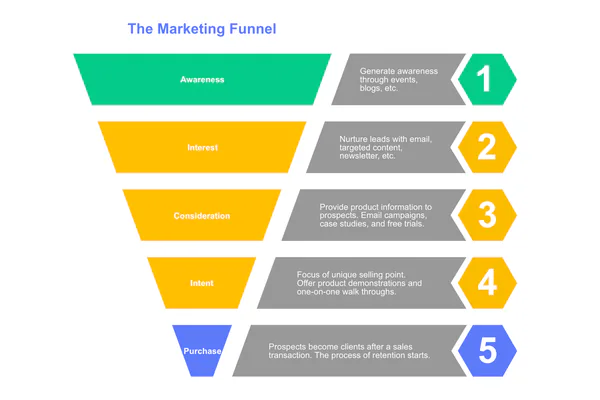
A product marketing strategy is not just a launch checklist. It is the system that defines who the product serves, how it will be framed, how it will reach the market, and how success will be measured. Strong strategies are simple enough to guide decisions but detailed enough to avoid generic messaging.
1. Audience Segmentation
Not every potential buyer should be treated as the same audience. Product marketing works best when segments are specific. That can mean segmenting by company size, role, industry, maturity level, behavior, pain point, or buying motivation.
Good segmentation improves:
- Message relevance
- Channel selection
- Pricing logic
- Sales efficiency
- Feature prioritization feedback
2. Positioning
Positioning is the strategic choice of how the product should be perceived relative to alternatives. This is not just a slogan. It is a decision about category, problem framing, target user, and competitive angle.
Effective positioning usually answers:
- What category are we in?
- Who is the product for?
- What problem do we solve?
- What makes us different?
- Why should the audience believe us?
3. Value Proposition
The value proposition is the core reason a buyer should care. It should move beyond feature description and connect to outcomes. Instead of saying a platform has dashboards, automation, or integrations, strong product marketing explains what those capabilities help the customer achieve faster, more reliably, or more profitably.
4. Messaging Architecture
Different audiences need different levels of detail. Executives care about outcomes, team leaders care about workflow impact, and end users care about usability. A messaging architecture helps teams deliver one consistent story while adapting examples and proof points for each audience.
5. Go-to-Market Planning
Go-to-market planning turns strategy into action. It includes launch timing, channel priorities, content needs, sales readiness, customer communication, partner support, and post-launch measurement. A sound plan answers not only what will be said, but who will say it, where it will appear, and what should happen next.
A Simple Product Marketing Framework From Research to Launch
Many teams overcomplicate product marketing by producing large strategy documents that never shape execution. A better approach is a practical framework that can be repeated across launches, updates, and new product lines.
Step 1: Collect Real Customer Insight
Start with evidence, not assumptions. Review customer interviews, support conversations, CRM notes, demos, churn reasons, and win-loss data. Look for patterns in how customers describe the problem, what makes them hesitate, and what makes them commit.
At this stage, the goal is not polished messaging. The goal is to hear the market in its own language.
Step 2: Define the Best-Fit Audience
Choose the audience with the strongest combination of need, urgency, and commercial value. Trying to serve everyone in one launch almost always weakens the message. A product marketing framework works better when it forces prioritization.
Step 3: Build Positioning and Proof
Draft a clear position, then support it with proof. That proof can come from product capabilities, customer stories, benchmarks, case studies, analyst validation, or workflow outcomes. Claims without proof often sound interchangeable with competitors.
Step 4: Translate Strategy Into Assets
Once the message is clear, turn it into usable materials. These often include:
- Website copy
- Product pages
- Sales decks
- Demo narratives
- Email announcements
- In-app messaging
- Internal launch briefs
Step 5: Enable Internal Teams
Even strong messaging fails if internal teams do not understand it. Product marketing should brief sales, customer success, support, and leadership on what is changing, why it matters, and how to talk about it consistently.
Step 6: Launch, Learn, and Optimize
Launch is the midpoint, not the finish line. Review adoption, page conversion, demo requests, objection trends, and customer response. If a message sounds good in planning but fails in the field, refine it. The best product marketing teams treat launches as learning systems, not static events.
Real Examples of Product Marketing in Action
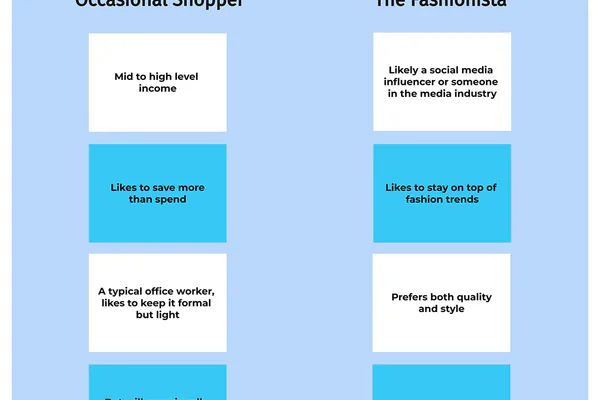
Product marketing becomes easier to understand when you look at how recognizable companies shape perception around a product, not just a brand. The strongest examples do not merely advertise features. They frame the product for a specific buyer and a specific job to be done.
Apple and the iPhone
Apple is a strong example of product marketing because it rarely leads with technical complexity alone. Even when the product contains major engineering improvements, the communication usually centers on what the user can do, feel, or create more easily. Camera improvements become better memories and creator tools. Processor improvements become speed, battery life, and smoother experiences.
The lesson is not that every business should market like Apple. The lesson is that product marketing works when the audience can quickly connect capability to outcome.
Slack and Workplace Communication
Slack did more than introduce a messaging product. It positioned itself as a better way for teams to work together, reduce internal email clutter, and keep conversations organized. That shift from tool description to workflow improvement was critical. The product was not simply chat software. It was framed as a change in how work gets done.
That is classic product marketing: define the problem, reshape the category conversation, and make the product feel like the practical answer to daily friction.
Notion and Flexible Use Cases
Notion provides a good example of product marketing in a product with many possible uses. A flexible tool can easily become hard to explain. Notion has consistently used templates, creator examples, team workflows, and role-based stories to make the product easier to understand. Instead of forcing one narrow use case, the company helps different audiences picture themselves using the product in a concrete way.
This shows that product marketing is not always about narrowing the product itself. Sometimes it is about packaging multiple use cases into clearer entry points.
Salesforce and Business Outcome Framing
Salesforce often markets product value through business outcomes such as pipeline visibility, customer relationship management, automation, and revenue performance. Rather than focusing only on software components, it ties product use to team productivity and growth. That approach helps enterprise buyers justify purchase decisions internally.
The lesson here is that product marketing should match buyer context. Technical users may want depth, but decision-makers often need a stronger connection to operational or commercial impact.
Common Product Marketing Mistakes to Avoid
Even experienced teams make predictable errors. Most of them come from weak focus, poor internal alignment, or an overreliance on product language that makes sense inside the company but not in the market.
Leading With Features Instead of Problems
Features matter, but they rarely create urgency on their own. Buyers care about problems, outcomes, and tradeoffs. If messaging starts with a dense feature list, the audience has to work too hard to understand why the product matters.
Trying to Speak to Everyone
Broad messaging usually becomes bland messaging. If the audience is too wide, the value proposition loses precision. Product marketing improves when teams choose a best-fit segment and accept that sharper positioning may exclude some buyers.
Using Generic Differentiation
Claims like easy to use, innovative, or all-in-one are common because they sound positive. They are also weak unless backed by specific proof. Generic claims make products sound interchangeable.
Launching Without Internal Readiness
A product launch is not just an external event. If sales, support, and customer success are unprepared, the market experience becomes inconsistent. Internal confusion shows up quickly in demos, onboarding, and customer trust.
Ignoring Post-Launch Learning
Some teams treat launch assets as final. Strong product marketing teams keep listening after launch. They look for message resonance, unexpected objections, and audience behavior that reveals whether the position is landing as intended.
How to Measure Product Marketing Success
Product marketing should not be judged only by campaign activity or launch volume. The real question is whether the work improved how the product performs in the market. That requires a mix of commercial, behavioral, and message-level metrics.
Adoption and Activation
For new products or features, adoption metrics show whether customers are using what was launched. Activation metrics reveal whether new users reach meaningful first value.
Conversion and Pipeline Impact
Product marketing can influence website conversion, demo request quality, sales pipeline progression, and win rates. If better positioning improves buyer understanding, conversion quality often improves as well.
Sales Confidence and Objection Trends
Not every useful metric is external. Internal indicators matter too. Sales teams can report whether messaging is easier to use, whether new battlecards help in competitive deals, and whether common objections are becoming easier to handle.
Retention and Expansion
For existing products, product marketing also supports retention and expansion. Clear messaging around new use cases, editions, and feature value can improve upgrade behavior and ongoing engagement.
Message Resonance
Message resonance can be measured through qualitative and quantitative signals such as ad response, page engagement, call recordings, surveys, demo feedback, and win-loss interviews. The key is to test whether the market repeats your message back in its own buying language.
A balanced product marketing measurement approach often includes:
- Launch adoption rate
- Conversion rate by audience segment
- Sales win rate in target deals
- Competitive loss reasons
- Feature usage depth
- Retention or expansion movement
- Message recall and resonance feedback
How Smaller Businesses Can Apply Product Marketing Without a Large Team
Product marketing is not only for large software companies. Small businesses, SaaS startups, ecommerce brands, agencies, and service businesses can all benefit from the same logic. The difference is scale, not relevance.
A smaller business may not have a dedicated product marketing department, but it can still apply product marketing principles by asking better questions and creating clearer communication.
A Lean Version of Product Marketing
For smaller teams, a practical approach looks like this:
- Interview recent customers and ask why they bought
- Identify the most profitable or fastest-moving customer segment
- Write one clear positioning statement for that segment
- Turn that statement into homepage copy, sales language, and offer pages
- Train everyone who talks to customers to use the same message
- Review conversions and objections every month
This process is simple, but it creates a discipline many businesses skip. Instead of saying more, it helps them say the right thing more clearly.
Why This Matters for Growth
When budgets are limited, unclear messaging becomes expensive. Weak positioning leads to wasted traffic, lower conversion, slower sales conversations, and products that feel easier to ignore. Product marketing improves efficiency by making every customer touchpoint more coherent.
Conclusion
Product marketing matters because markets rarely reward products for existing. They reward products that are understood, relevant, differentiated, and well-supported across the buyer journey. That is the real role of product marketing: not simply to promote a product, but to make its value clear to the people most likely to choose it.
The strongest product marketing strategies combine customer insight, focused positioning, practical go-to-market planning, and continuous learning after launch. Whether the business is a startup introducing its first offer or a larger company managing a mature product line, the discipline stays the same. Know the audience, define the problem, communicate the value clearly, enable the people who sell it, and measure what actually changes in the market.
For marketers, founders, and business teams, product marketing is one of the clearest ways to close the gap between a good product and a product that wins attention, adoption, and trust. When done well, it turns product knowledge into market momentum.
