
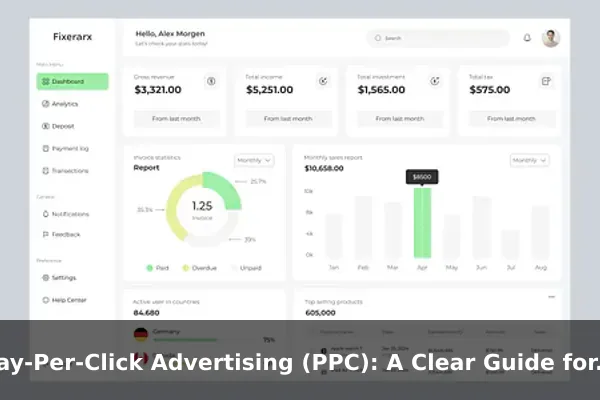
Every time you search for something on Google and see ads at the top of the results, you are looking at pay-per-click advertising in action. PPC is a model where businesses pay only when someone clicks their ad — not simply when it appears. That straightforward idea makes it one of the most measurable and controllable forms of digital marketing available today.
This guide is written for beginners. Whether you are a business owner exploring your first paid campaign or a marketer learning the fundamentals, you will find plain-language explanations of how PPC works, what it costs, and how to build a simple campaign without burning through your budget unnecessarily.
What PPC Means and Why It Matters
PPC stands for pay-per-click. Unlike traditional advertising — where you pay for a billboard or television spot regardless of who sees it — PPC charges you only when someone actively clicks your ad and visits your page. This makes it a cost-efficient option for businesses that want measurable results tied directly to real audience interest.
PPC also differs from organic marketing like SEO in one critical way: speed. SEO can take months to produce rankings. A PPC campaign can drive traffic within hours of launch. For businesses testing a new offer, promoting a time-sensitive deal, or entering a competitive market, PPC provides immediate visibility that organic methods simply cannot match in the short term.
How PPC Ads Actually Work
When you run a PPC ad, you enter an auction. Each time a user searches a relevant keyword, the ad platform runs a split-second auction to determine which ads appear and in what order. Two main factors decide your position:
- Your bid: The maximum amount you are willing to pay per click.
- Quality Score: A platform rating based on your ad’s relevance, your landing page quality, and your historical click-through rate.
The highest bidder does not automatically win. An advertiser with a lower bid but a highly relevant, well-optimized ad can outrank a competitor spending far more. This quality-based system rewards advertisers who genuinely match what users are searching for — keeping the experience fair even for small-budget advertisers.
Common PPC Platforms Beginners Should Know
Several platforms support PPC campaigns, and the right choice depends on where your audience spends their time.
- Google Ads: The largest PPC platform, placing ads in Google Search results, YouTube, and across the Google Display Network. Best for capturing demand from users actively searching for your products or services.
- Microsoft Ads (Bing Ads): Similar to Google Ads but reaches a distinct audience at typically lower cost-per-click. Often overlooked yet valuable for specific demographics and niches.
- Meta Ads (Facebook and Instagram): Paid social platforms using interest and demographic targeting rather than search intent. Useful for building awareness and reaching defined audience profiles.
- LinkedIn Ads: Suited for B2B campaigns targeting professionals by job title, industry, or company size.
Beginners are usually best served starting with Google Ads or Meta Ads, depending on whether their customers are actively searching or need to be reached through interest-based discovery.
The Core PPC Terms You Need to Understand
Getting comfortable with PPC means learning a handful of terms that appear in every campaign dashboard.
- CPC (Cost Per Click): What you pay each time someone clicks your ad.
- CTR (Click-Through Rate): The percentage of people who see your ad and click it. A higher CTR signals a relevant, compelling ad.
- Impressions: The number of times your ad is shown, regardless of whether anyone clicks.
- Conversion: A completed goal action — a purchase, sign-up, phone call, or form submission — that occurs after the click.
- Quality Score: Google’s measure of ad relevance, expected CTR, and landing page experience.
- ROAS (Return on Ad Spend): Revenue generated for every dollar spent on ads. A ROAS of 4 means you earned $4 for every $1 spent.
How to Build Your First PPC Campaign
Building a PPC campaign involves deliberate, sequential steps. Rushing any of them is a common source of wasted budget.
- Set a clear goal. Decide whether you want website traffic, leads, product sales, or phone calls. Your goal shapes every other decision.
- Choose your keywords. Use keyword research tools to find terms your target customers actually search for. Focus on specific, intent-driven phrases rather than broad generic words.
- Write your ad copy. Include the keyword in the headline, state a clear benefit, and add a direct call to action such as Get a Free Quote or Shop Now.
- Build a matching landing page. Your landing page must deliver exactly what the ad promises. A mismatch between ad and page is the top reason PPC campaigns fail to convert visitors.
- Set a daily budget. Start modest — even $10 to $20 per day is enough to gather initial data without significant financial risk.
What PPC Costs and How Budgeting Works
PPC costs vary widely based on your industry, keyword competition, and platform. Highly competitive niches like legal services or financial products can cost $20 to $50 per click or more. Other industries may see CPCs between $0.50 and $3.00. You control your maximum exposure through daily and monthly budget caps, which means you are never surprised by an enormous bill.
A practical starting approach is to set a modest daily budget, monitor which keywords drive clicks and conversions, pause what does not perform, and gradually increase spend on campaigns that show positive returns. Budget control is one of PPC’s greatest strengths — you can reduce or pause spending at any moment.
Mistakes That Cause Beginners to Waste Money
Most early PPC losses trace back to a short list of preventable mistakes.
- Using overly broad keywords: Targeting shoes instead of men’s trail running shoes size 12 wastes budget on unqualified clicks from users who will never buy.
- Skipping negative keywords: Negative keywords prevent your ad from showing on irrelevant searches. Without them, you pay for clicks that will never convert.
- Weak landing pages: Clicks are only valuable if the landing page persuades visitors to take action. A generic homepage rarely converts paid traffic effectively.
- Not tracking conversions: Without conversion tracking set up, you cannot determine which ads or keywords are actually generating results.
- Setting and forgetting: PPC requires regular review. Ads, bids, and keywords need ongoing adjustment to stay efficient.
How to Measure and Improve Results Over Time
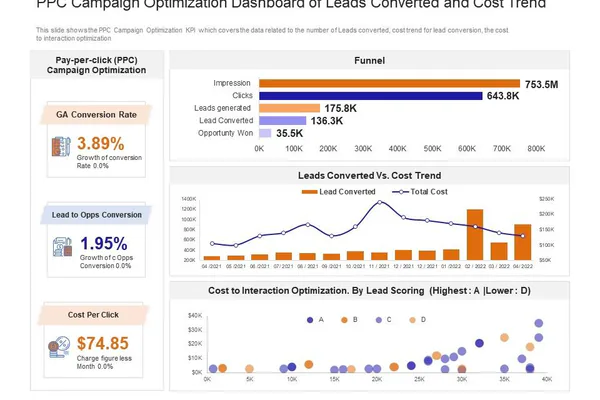
Improving PPC performance is a continuous process of reviewing data, testing changes, and refining your approach based on evidence rather than guesses.
- Review your CTR to identify which ads attract clicks and which are being ignored by your audience.
- Monitor your conversion rate to see how effectively your landing pages turn visitors into customers.
- Pause keywords that consume budget without producing conversions.
- Run A/B tests on ad headlines and descriptions to discover which messaging resonates better.
- Use search term reports to see which actual queries triggered your ads, then add new negative keywords to filter irrelevant traffic.
Even small weekly adjustments compound over time. Campaigns that are actively managed consistently outperform those left on autopilot.
When PPC Makes Sense for a Business
PPC is a strong choice when you need results quickly, when your customers are actively searching for what you offer, or when you are promoting a seasonal or time-limited offer. It is also an effective way to test new products or markets before committing to long-term organic strategies.
That said, PPC works best alongside — not instead of — organic marketing. SEO builds lasting traffic that does not depend on continued ad spend. A business that combines both benefits from immediate paid visibility while growing sustainable rankings over time. Realistic expectations matter too: the first few weeks of any campaign are a learning phase, and treating early data as valuable information — rather than just money spent — is the mindset that leads to long-term success.
Conclusion
Pay-per-click advertising gives businesses direct, measurable access to their audience — paying only for genuine interest rather than passive exposure. For beginners, the foundation is simple: set a clear goal, use targeted keywords, write honest ad copy, and send traffic to a landing page built to convert. Keep your starting budget modest, track every result, and improve based on data.
PPC rewards attention and patience. Businesses that treat it as an ongoing process — rather than a one-time setup — consistently see stronger returns. With the fundamentals covered in this guide, you have everything you need to launch your first campaign with confidence and without unnecessary risk.
