
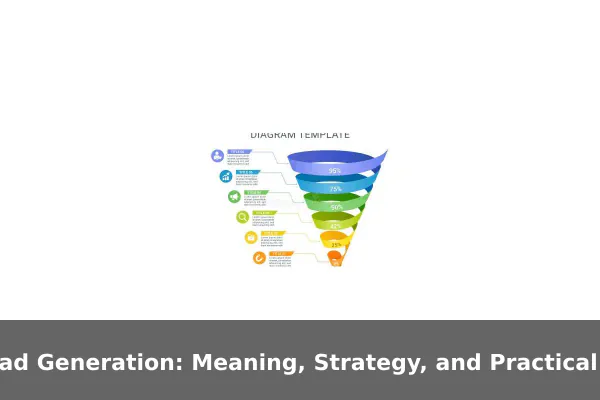
Lead generation is one of the most practical ideas in marketing because it answers a simple business question: how do you turn attention into a real sales opportunity? Plenty of companies get website visits, social media engagement, or ad clicks, but those signals alone do not create revenue. A business grows when it can identify interested people, capture their information, understand their needs, and move them closer to a purchase. That full process is what lead generation is designed to do.
For beginners, the topic can feel confusing because lead generation sits between marketing and sales. It involves content, landing pages, forms, offers, email follow-up, and measurement. It also involves judgment. Not every visitor is ready to buy, and not every lead is worth equal effort. A strong lead generation system helps a business focus on the people most likely to become customers instead of treating all traffic the same.
This article explains the meaning of lead generation in clear terms, shows how a practical strategy works, and gives real examples you can apply to different types of businesses. Rather than treating lead generation as a buzzword, the goal here is to show it as an operational process that connects audience interest, qualification, nurturing, and conversion.
What Lead Generation Means in Marketing
In marketing, lead generation is the process of attracting potential customers and encouraging them to share contact details or another measurable sign of interest. That action might be filling out a form, subscribing to a newsletter, requesting a demo, downloading a guide, registering for a webinar, starting a free trial, or asking for a quote.
A lead is not just any person who sees your brand. A lead is someone who has moved beyond passive awareness and has taken an identifiable step that says, I am interested enough to continue the conversation. This matters because marketing becomes more useful when it can separate general attention from genuine buying intent.
Lead vs visitor vs prospect
It helps to distinguish three common terms:
- Visitor: someone who lands on your website, content page, or campaign page.
- Lead: someone who gives information or takes a trackable conversion action.
- Prospect: a lead that appears to be a realistic fit for the product or service.
Not every visitor becomes a lead, and not every lead becomes a customer. The job of lead generation is to increase the number of relevant people moving from one stage to the next.
Where lead generation fits in the customer journey
Lead generation usually sits in the middle of the buying journey. Awareness creates attention, but lead generation creates a bridge between attention and sales readiness. For that reason, it is often one of the clearest points where marketing performance can be connected to business results. It gives companies a structured way to capture demand, not just hope that interested people will return later on their own.
Why Lead Generation Matters for Business Growth
Lead generation matters because growth becomes more predictable when a business can consistently create a pipeline of interested people. Without it, sales can become overly dependent on chance, word of mouth, or a small number of one-time referrals. With it, a company can build a repeatable system for creating future conversations and future revenue.
It improves focus and efficiency
When leads are captured and organized, businesses can stop treating every audience member the same way. They can segment leads by source, interest, industry, budget, or readiness to buy. That makes follow-up more relevant and reduces wasted time. A sales team can spend more energy on qualified opportunities, while marketing can improve the campaigns that attract stronger leads.
It makes marketing more measurable
Brand awareness is valuable, but it can be hard to connect directly to revenue. Lead generation creates measurable checkpoints. A business can track how many people arrived, how many converted, what each lead cost, which source produced better quality, and which leads eventually became customers. This level of visibility is what turns marketing from a creative activity into a decision-making system.
It supports both short-term and long-term growth
Some leads convert quickly, such as a person requesting a quote for an urgent need. Others require education, trust-building, and follow-up over weeks or months. A lead generation system supports both. It captures immediate demand while also building a database of future opportunities that can be nurtured over time.
How the Lead Generation Process Works
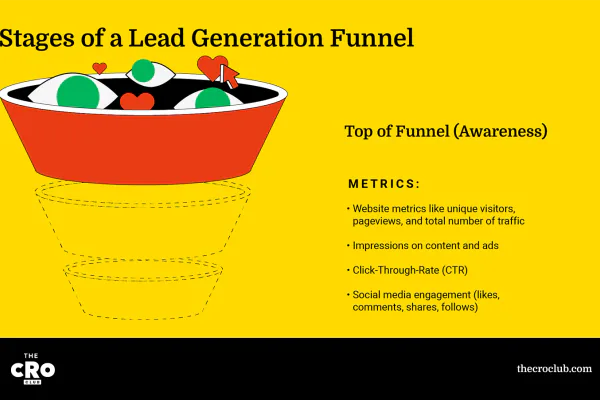
At a practical level, lead generation works as a sequence of connected steps. A business attracts people, offers value, captures interest, qualifies the lead, and follows up until the person is ready to buy or clearly not a fit.
- Attract attention: bring the right audience through content, search, social media, paid ads, referrals, events, or partnerships.
- Present an offer: give people a reason to respond, such as a checklist, consultation, discount, free trial, or useful newsletter.
- Capture details: use a form, signup box, booking tool, chatbot, or call button to collect contact information.
- Qualify the lead: evaluate whether the person matches your target customer and level of intent.
- Nurture and convert: follow up with education, reminders, or sales contact until the lead becomes a customer or drops out.
Attraction is only the starting point
Many businesses make the mistake of believing traffic equals lead generation. It does not. Traffic simply creates the possibility of a lead. If the page has no clear next step, weak messaging, or no convincing offer, attention disappears without producing business value.
Lead capture depends on perceived value
People do not hand over contact details for no reason. They do it when the exchange feels worthwhile. That is why good lead generation often includes a clear value proposition: a useful resource, a solution to a problem, a faster buying path, or access to expertise. The stronger the value, the higher the conversion potential.
Qualification prevents false progress
A large list of contacts can look impressive but still underperform if the leads are unqualified. Qualification can be simple or advanced. For a local service business, it might mean checking location and service need. For a software company, it might include company size, role, use case, and budget. The purpose is not to reject people harshly. It is to understand who deserves immediate attention and who needs more nurturing.
Nurturing turns interest into readiness
Most leads are not ready to buy the moment they convert. They may still be comparing options, gathering budget approval, or learning the basics. Nurturing keeps the conversation alive through welcome emails, educational content, case studies, product comparisons, reminders, retargeting ads, or direct outreach. This stage is often where lead generation either compounds or breaks down.
Core Elements of an Effective Lead Generation Strategy
An effective lead generation strategy is not just a campaign. It is a system with several connected parts. If one part is weak, the whole process loses efficiency.
1. A clearly defined audience
Lead generation starts with knowing who you want to attract. If the audience definition is vague, the offer will usually be vague too. Strong audience clarity includes questions such as:
- What problem is the person trying to solve?
- What stage of awareness are they in?
- What objections or concerns might they have?
- What signals suggest they are a good fit?
- What action are they most likely to take first?
A beginner-friendly lead generation strategy should target a specific audience segment rather than trying to appeal to everyone at once.
2. A compelling value proposition
Your value proposition explains why someone should respond now instead of ignoring the offer. It should make the benefit obvious. For example, Get weekly marketing tips is broad. Get a 7-step lead follow-up template that helps small teams respond faster is more concrete and more likely to convert.
The best offers reduce friction by being immediately useful. They solve a narrow problem, save time, reduce uncertainty, or provide access to something the audience wants.
3. A relevant lead magnet or conversion offer
A lead magnet is a resource or incentive offered in exchange for contact details. Not every business needs the same type. Common options include:
- Guides, checklists, or templates
- Free consultations or audits
- Coupons or limited-time offers
- Webinar registrations
- Product demos
- Free trials or freemium signups
- Waitlist access for new products
The key is relevance. A generic freebie may generate many signups but weak purchase intent. A focused lead magnet often produces fewer leads but much better quality.
4. A landing page with one clear goal
Landing pages are where many lead generation efforts succeed or fail. A strong landing page usually includes a sharp headline, a short explanation of value, proof or credibility, a visible call to action, and a simple form. It should focus on one conversion goal rather than distracting visitors with too many links or competing messages.
Good landing pages answer the silent question in the visitor’s mind: What do I get, why should I trust this, and what happens if I submit?
5. A form that balances quality and simplicity
Forms collect the information that turns anonymous traffic into known leads. Shorter forms typically increase conversions, but longer forms can improve qualification. The right balance depends on the offer and the sales process. A newsletter signup may only need an email address. A B2B demo request may require job title, company name, and team size.
The best forms ask only for information that will actually be used.
6. A follow-up system
Lead generation does not end at form submission. Businesses need an organized follow-up process, often using email automation, CRM tagging, sales alerts, or onboarding sequences. Fast and relevant follow-up usually improves conversion rates because interest is highest soon after the lead takes action.
In other words, the strategy should not stop at capture. It should define what happens next.
Top Lead Generation Channels and Tactics
Lead generation can happen through many channels, but each channel works best under different conditions. The right mix depends on your audience, budget, sales cycle, and type of offer.
Content and SEO
Educational content can attract people searching for answers, comparisons, or solutions. Blog posts, guides, calculators, and resource hubs can generate leads when they connect naturally to a relevant offer. This channel often works well for evergreen demand and long-term compounding, especially when search intent matches the business offer.
Social media and community engagement
Social platforms can generate leads by distributing useful content, promoting events, and encouraging signups through direct response posts or profile links. This approach works best when the content starts conversations instead of only broadcasting promotions. Communities, niche groups, and founder-led content can be especially effective because they create familiarity before the conversion ask appears.
Email capture and newsletter growth
Email remains one of the strongest lead generation tools because it creates an owned audience. Even when a lead is not ready to buy immediately, newsletter signup offers a low-friction way to continue the relationship. Over time, regular email content can nurture interest and move subscribers toward stronger actions like consultations, demos, or purchases.
Paid advertising
Paid ads can accelerate lead generation by placing offers in front of targeted audiences quickly. Search ads capture active intent, while display and social ads can promote lead magnets or remarket to previous visitors. The main advantage is speed and control. The main risk is paying for poor-quality leads when targeting or landing pages are weak.
Events, webinars, and workshops
Live or recorded educational events work well when the buying decision requires trust or explanation. They allow a business to demonstrate expertise, answer objections, and capture attendees who are already showing strong interest. For many service businesses and B2B companies, webinar registration is a high-quality lead source because it signals time investment, not just casual curiosity.
Referrals and partnerships
Some of the strongest leads come from trusted introductions. Referral programs, affiliate partners, complementary service providers, and industry collaborators can all send high-intent leads. These channels often produce fewer leads than broad digital campaigns, but the quality can be significantly higher because trust is transferred from the source.
Practical Examples of Lead Generation
Lead generation becomes easier to understand when viewed through real business actions. Below are practical examples that show how different offers attract different types of leads.
Ebook or guide download
A consulting company publishes a detailed guide called How to Build a First 90-Day Sales Plan. Visitors can download it by submitting their name, email, and company size. This works because the guide appeals to people with a clear business problem, and the company can later follow up with related advice or an invitation to a consultation.
Free trial signup
A software business offers a 14-day free trial. Instead of asking people to commit immediately, it lets them experience the product with low risk. Everyone who starts the trial becomes a lead, and the company can monitor onboarding behavior to identify which users show serious intent.
Demo request form
A B2B platform uses a landing page offering a personalized demo. The form asks for business email, company size, and use case. This generates fewer leads than a general newsletter, but those leads are often far closer to purchase because the action itself signals buying interest.
Coupon or discount offer
An online store promotes a first-order discount in exchange for email signup. This is a classic lead generation tactic for ecommerce. The immediate incentive captures contact details, and the brand can then use email to recover abandoned carts, highlight products, and encourage repeat purchases.
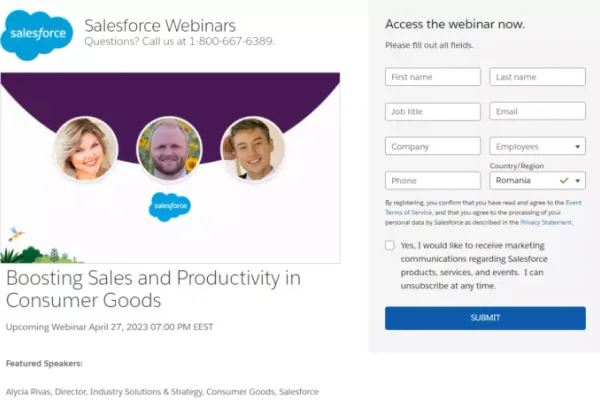
Webinar registration
A marketing agency hosts a webinar on improving conversion rates for landing pages. People register with their email and job role. After the event, attendees receive the replay, supporting resources, and a follow-up invitation for an audit. This is effective because the webinar qualifies interest through the topic itself.
Quote request for local services
A home renovation company invites visitors to request a quote. The form collects project type, location, timeline, and phone number. This is a direct lead generation model where the conversion action immediately opens a sales conversation.
Newsletter signup with a strong niche promise
A founder who teaches small business marketing offers a weekly email focused on one practical customer acquisition lesson. The promise is narrow, specific, and useful. Over time, subscribers become warm leads for paid workshops, templates, or consulting services.
These examples show an important principle: the best lead generation offers match the buying context. A person early in the journey may respond to education. A person further along may prefer a demo, trial, quote, or consultation.
Common Mistakes That Reduce Lead Quality
Many lead generation problems are not caused by lack of traffic. They are caused by weak alignment between audience, offer, and follow-up.
Targeting too broadly
Broad targeting can create lead volume without relevance. When messaging is too general, it may attract curiosity clicks rather than qualified interest. Specificity usually improves lead quality, even if raw numbers fall.
Offering something generic
A weak offer often produces weak results. If the lead magnet feels interchangeable or low value, people either ignore it or sign up without serious intent. A more focused and problem-driven offer usually performs better.
Using forms that ask for too much
Long forms create friction. If every field feels necessary, conversion rates often drop. Businesses should collect only the information needed for the next step, not every detail they might possibly want later.
Following up too slowly
Leads cool down quickly. A delayed response can waste the moment when interest is highest. Fast follow-up is especially important for demo requests, quote requests, and consultation bookings.
Measuring volume instead of quality
Ten qualified leads are usually more valuable than one hundred weak ones. When teams optimize only for cheap signups, they may unintentionally lower the number of leads that can actually convert into revenue.
How to Measure Lead Generation Results
To improve lead generation, businesses need to measure more than top-level traffic. The goal is to understand both efficiency and quality.
Conversion rate
This measures the percentage of visitors who complete the desired action. It helps evaluate whether the page, offer, and call to action are working together effectively.
Cost per lead
Cost per lead shows how much it costs to generate one lead from a campaign or channel. This is especially useful for paid campaigns, but it becomes much more meaningful when paired with lead quality.
Lead-to-customer rate
This tells you how many captured leads eventually become paying customers. It is one of the clearest ways to compare lead sources because it moves beyond surface-level conversions.
Lead quality indicators
Quality can be measured through criteria such as fit, budget, readiness, booking rates, email engagement, demo attendance, or sales acceptance. Many businesses use categories like marketing-qualified leads and sales-qualified leads to separate early interest from stronger purchase potential.
Speed to follow-up
How quickly your team responds after lead capture can affect results significantly. If qualified leads wait too long, conversion rates often suffer. Measuring response time helps reveal process problems that traffic reports alone cannot show.
Channel performance by business outcome
The best lead generation channel is not always the one with the highest volume. It is often the one that produces better-fit leads, higher conversion rates, lower acquisition cost over time, or stronger customer value. That is why channel comparison should be tied to revenue outcomes, not vanity metrics.
Simple Tips to Improve Lead Generation Over Time
Lead generation usually improves through steady refinement rather than one dramatic change. Small improvements at each step can create meaningful gains.
- Test stronger offers: compare a checklist, audit, webinar, consultation, or trial to see what attracts better-fit leads.
- Refine headlines and calls to action: clearer benefit language often improves conversions.
- Segment your follow-up: send different messages based on source, interest, or readiness to buy.
- Align marketing and sales: define what a good lead looks like so both teams optimize for the same outcome.
- Review lead source quality regularly: stop overinvesting in channels that create activity without results.
- Reduce friction where possible: simplify forms, improve page load speed, and make next steps obvious.
One useful mindset is to treat lead generation as a system of hypotheses. If the wrong people are converting, adjust targeting. If the right people visit but do not convert, improve the offer or landing page. If leads convert but do not buy, improve qualification or follow-up. This approach keeps optimization practical and focused.
Conclusion
Lead generation is not just about collecting names or growing an email list. It is the structured process of turning interest into an opportunity the business can actually develop. When done well, it connects audience attention, value exchange, qualification, nurturing, and sales action in a way that supports predictable growth.
The most effective lead generation strategy is usually not the loudest or the most complicated. It is the one that clearly understands the audience, offers something genuinely useful, captures the right information, and follows up with relevance. Whether a business uses guides, webinars, trials, quotes, or newsletter signups, the principle remains the same: attract the right people, make the next step easy, and build a system that values quality as much as quantity.
