
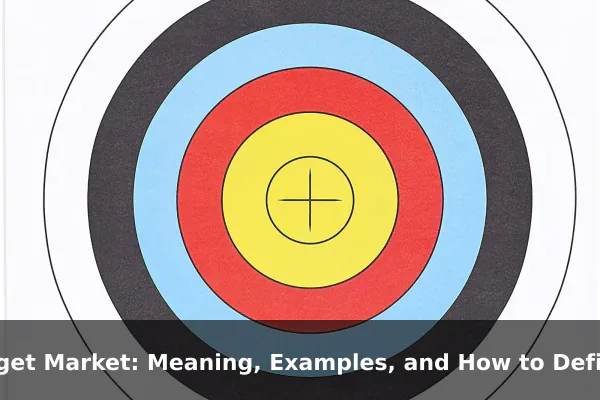
Every business, no matter how large or small, faces the same fundamental marketing challenge: you cannot reach everyone, and trying to do so wastes time, money, and energy. The most effective companies in the world are not the ones that shout the loudest — they are the ones that speak directly to the right people. That is the core idea behind a target market.
Understanding your target market is one of the most important steps in building any marketing strategy. It shapes the language you use, the channels you invest in, the products you develop, and the prices you set. Without a clearly defined target market, even the most creative campaign can fall flat. In this article, you will learn exactly what a target market is, see real-world examples across industries, and walk through a practical method for defining one for your own business.
What a Target Market Means
A target market is a specific group of people a business identifies as the most likely buyers of its product or service. It is the defined segment of the broader market that a company focuses its marketing efforts on, rather than trying to appeal to every possible consumer.
Think of it this way: a broad market might include everyone who buys shoes. But a target market for a specific brand might be women between the ages of 25 and 40 who are interested in sustainable fashion and are willing to pay a premium for ethically made products. The narrower definition makes every marketing decision clearer and more purposeful.
The Core Idea Behind Market Focus
Market focus means concentrating your resources where they are most likely to generate results. Instead of creating generic messaging that tries to appeal to everyone, a focused approach allows a business to craft highly relevant communication that resonates deeply with a specific group. A broad market is simply all the people who could theoretically buy a product. A target market is the subset of those people you are actively trying to reach, based on shared characteristics, needs, and behaviors. The difference is intentionality — a target market is chosen, not assumed.
Why Defining a Target Market Matters
Defining a target market is not just a theoretical exercise. It has direct, measurable effects on how well a business performs across nearly every function — from product development to advertising spend.
Stronger Messaging and Positioning
When you know exactly who you are talking to, you can craft messages that speak directly to their problems, desires, and values. Generic messaging rarely connects with anyone deeply. Targeted messaging, on the other hand, makes the right people feel like your product was built specifically for them.
More Efficient Use of Budget
Marketing budgets are finite. A defined target market allows you to concentrate spending on the channels, platforms, and formats where your ideal customers are most active — rather than spreading thinly across everything. This directly improves return on investment.
Higher Conversion Rates and Customer Loyalty
People convert when they see a product that feels relevant and valuable to them. Targeting the right segment means your offers land in front of people who are already inclined to care, which naturally leads to better click-through rates, more sign-ups, and stronger sales. Over time, that relevance also builds loyalty — customers who feel genuinely understood keep coming back.
Target Market vs Target Audience
These two terms are often used interchangeably, but they refer to slightly different concepts. Understanding the distinction helps you use both more precisely in your marketing planning.
A target market refers to the broader group of people a business aims to sell to. It is defined at the business or product level and typically describes a long-term strategic focus. A target audience is more campaign-specific — it refers to the particular group of people you are trying to reach with a specific piece of content or advertisement.
- Target market: Women aged 25–45 who practice yoga regularly and value health and wellness.
- Target audience: Women aged 28–35 in urban areas who follow yoga influencers on Instagram and recently searched for eco-friendly yoga mats.
The target market is the strategic foundation. The target audience narrows it further for execution. Every target audience is a subset of the target market, but not every member of the target market is the audience for a specific campaign.
Common Types of Target Market Segmentation
Segmentation is the process of dividing a broad market into distinct groups of people who share similar characteristics. There are four primary types used to define a target market, and most businesses use a combination of all four.
Demographic Segmentation
This is the most commonly used type. Demographic segmentation groups people by measurable personal traits such as age, gender, income level, education, occupation, and marital or family status. Demographics are easy to measure and often correlate strongly with purchasing behavior. For example, luxury car brands target high-income earners, while family-oriented brands may focus on parents with young children.
Geographic Segmentation
Geographic segmentation divides the market based on location — country, region, city, climate zone, or urban versus rural settings. A business selling winter coats will naturally focus on colder regions, while a local restaurant targets customers within a specific delivery radius.
Psychographic Segmentation
Psychographics go deeper than demographics by focusing on values, lifestyle choices, interests, opinions, and personality traits. This type of segmentation is especially useful when two people with identical demographics make very different purchasing decisions based on who they are and what they believe. Two 30-year-old men with the same income might prioritize completely different things — outdoor adventure versus home cooking — and a brand must choose which one it is speaking to.
Behavioral Segmentation
Behavioral segmentation groups people by their actions and patterns — how they use a product, how often they buy, their brand loyalty, and their stage in the buying journey. This is particularly valuable for digital marketing, where behavioral data is readily available. Examples include targeting users who abandoned a shopping cart or customers who have not purchased in 90 days.
Examples of Target Markets
Seeing real-world examples is one of the best ways to understand what a target market actually looks like in practice. Here are several concrete examples across different industries.

Fitness App
Target market: Adults aged 20–40 who want to work out at home, have limited time, and prefer self-paced exercise over gym memberships. They are health-conscious but not professional athletes, and they regularly use smartphones for daily tasks.
Organic Baby Food Brand
Target market: New parents aged 25–38, primarily mothers, with above-average household income who are concerned about food safety and ingredient quality. They shop online and are willing to pay more for certified organic products.
Cloud Accounting Software
Target market: Small business owners and freelancers with 1–10 employees who need affordable, easy-to-use bookkeeping tools. They are not accountants by training and want software that automates as much as possible without requiring technical expertise.
Sustainable Sneaker Brand
Target market: Environmentally conscious consumers aged 18–35 who follow sustainable living trends, prefer brands with transparent supply chains, and are willing to spend more on products that align with their values.
How to Define Your Target Market Step by Step
Defining a target market does not require expensive research or complex tools. A structured approach will give you a clear and actionable market profile you can use immediately.
Step 1: Identify the Core Value of Your Product
Start by asking: what problem does my product solve, and for whom is that problem most painful or important? The clearer you are about the value you provide, the easier it becomes to identify who needs that value most.
Step 2: Analyze Your Existing Customers
If you already have customers, they are your most valuable data source. Look at who buys most frequently, who spends the most, and who refers others. Patterns in their demographics, location, interests, and behavior often reveal your natural target market.
Step 3: Research Your Competitors
Study who your competitors are targeting and how they position their products. This helps you spot underserved segments they may be ignoring — and confirms whether the audience you have in mind is already saturated or still open.
Step 4: Choose Your Segmentation Criteria
Based on what you have learned, decide which combination of demographic, geographic, psychographic, and behavioral factors best describes the group most likely to buy from you. Be specific enough to be useful, but not so narrow that the market is too small to sustain the business.
Step 5: Write a Clear Target Market Profile
Document a one-paragraph description of your target market that includes their defining characteristics, key needs, typical behaviors, and the primary reason your product appeals to them. This profile becomes the reference point for all marketing decisions going forward.
Mistakes to Avoid When Choosing a Target Market
Many businesses make avoidable errors when defining their target market. These mistakes dilute marketing effectiveness and lead to wasted resources.
- Being too broad: Saying your target market is everyone who uses the internet is not a target market — it is a non-decision. A useful target market must be specific enough to guide real choices.
- Relying on assumptions instead of data: Many founders assume they know who their customer is without testing that assumption. Always validate your target market profile against real behavioral data or direct customer research.
- Confusing ideal customers with all possible buyers: Just because someone could theoretically buy your product does not mean they are your target market. Focus on who is most likely and most valuable, not merely possible.
- Never revisiting the definition: Markets evolve. A target market that was accurate two years ago may no longer reflect reality. Revisit and refine your profile regularly.
- Ignoring market size: A target market that is too narrow may not have enough potential buyers to support a sustainable business. Make sure the segment you choose is large enough to meet your growth goals.
How to Turn a Target Market Into Better Marketing
Defining your target market is only valuable if you actually use it. Here is how to translate that definition into more effective marketing across every channel and touchpoint.
Align Messaging to Their Language
Study how your target market talks about their problems and goals. Use their words, not industry jargon. The more your copy sounds like something they would say themselves, the more naturally it will connect.
Choose Channels Where They Are Active
Different target markets live on different platforms. A B2B target market of senior executives may be most reachable through LinkedIn and industry newsletters. A younger consumer audience may be most active on TikTok or YouTube. Match your channel strategy to where your target market actually spends time.
Design Offers That Reflect Their Priorities
Your pricing, bundles, trial periods, and promotional offers should be designed around what your target market values. A price-sensitive segment may respond to introductory pricing, while a quality-focused segment may value extended warranties or premium packaging more than discounts.
Create Content That Solves Their Specific Problems
Content marketing works best when it directly addresses the questions and challenges your target market faces. A target market of first-time homebuyers wants guides on mortgages and neighborhoods — not generic financial advice. Specificity is what makes content genuinely useful and shareable.
A well-defined target market is one of the most powerful foundations any business can build. It brings clarity to every marketing decision — from the words on a landing page to the budget allocated to a paid campaign. Without it, marketing becomes guesswork. With it, every message, offer, and channel choice has a clear purpose. Start by understanding your product’s core value, study who already buys from you, segment the broader market using the most relevant criteria, and document a clear profile. Then use that profile consistently — and revisit it as your business grows.
