
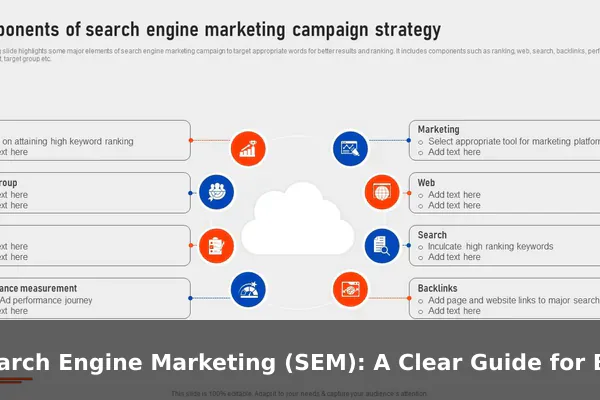
Every business wants to appear at the top of Google search results. But earning that position organically takes months of consistent effort. Search Engine Marketing offers a faster route — you pay to place your ads exactly where your customers are already looking. If you have ever noticed the small Sponsored label above search results and wondered how it works, this guide will walk you through everything from the basics to your first campaign setup.
SEM is one of the most measurable forms of advertising available today. Unlike a billboard or a TV commercial, every click, every keyword, and every dollar spent can be tracked and optimized in real time. That level of control makes it valuable for businesses of all sizes — from solo entrepreneurs testing a new product to established brands driving consistent lead flow. In this guide, you will learn what SEM really means, how it differs from SEO, and what it takes to run a successful paid search campaign as a complete beginner.
What SEM Means and How It Works
Search Engine Marketing (SEM) refers to the practice of gaining website traffic through paid advertising on search engines like Google, Bing, or Yahoo. When someone types a query into Google, the search engine runs an almost instant auction behind the scenes. Advertisers who have bid on that specific keyword compete for the available ad slots at the top and bottom of the search results page.
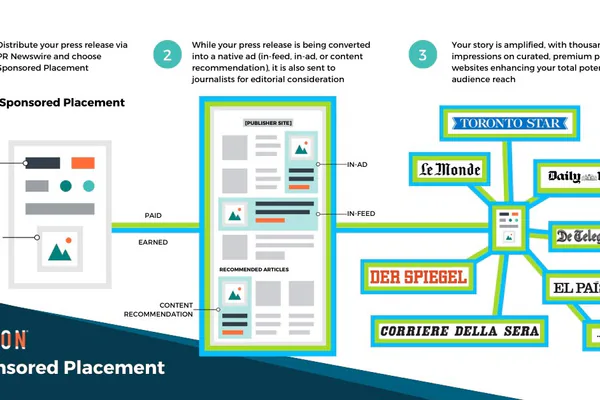
The most widely used SEM platform is Google Ads (formerly Google AdWords). It allows businesses to choose keywords their potential customers search for, write short text ads that appear for those searches, and set a maximum amount they are willing to pay per click. You only pay when someone actually clicks your ad — a model called Pay-Per-Click (PPC). This means your budget goes directly toward people who showed genuine interest, not passive viewers.
How the Ad Auction Works
Each time a search matches your keyword, Google runs an auction instantly. Your position in that auction is not determined by budget alone. It depends on two main factors combined into an Ad Rank:
- Your bid: The maximum cost-per-click (CPC) you are willing to pay
- Your Quality Score: A rating from 1 to 10 based on ad relevance, expected click-through rate, and landing page quality
A higher Quality Score means you can win better positions at a lower cost. This is why writing relevant ads and sending users to well-matched landing pages matters enormously from day one.
SEM vs SEO: The Difference Beginners Should Know
SEO (Search Engine Optimization) and SEM are frequently confused because both aim to increase your visibility in search results. However, the mechanisms and timelines are very different. Understanding the distinction helps you choose the right strategy for your current situation.
Side-by-Side Comparison
- SEO — Organic traffic: Results take months to build but continue without ongoing ad spend. Requires content, technical work, and link building.
- SEM — Paid traffic: Results appear immediately after launch but stop the moment you stop paying. Requires an active budget and ongoing bid management.
Neither approach is universally better. SEO builds long-term authority and compounding traffic. SEM delivers fast, targeted visibility at a direct cost. Most mature marketing strategies use both — SEM for immediate demand capture and SEO for sustainable growth over time.
When to Choose SEM Over SEO
SEM is often the smarter short-term choice in these scenarios:
- You need traffic right now — new product launch, limited-time offer, or seasonal campaign
- Your organic rankings are weak but a competitor is already winning that keyword
- You want to test whether a keyword converts before committing resources to a full SEO campaign
- You sell something with high purchase intent, such as “emergency plumber near me” or “buy running shoes online”
The Core Parts of an SEM Campaign
Before running your first campaign, it helps to understand the main building blocks. Each piece works together to determine whether your ads reach the right people and deliver a return.
Keywords and Match Types
Keywords are the search terms you bid on. You do not just choose one — you build a keyword list covering the variations your customers actually use. Match types control how closely a search must match your keyword before your ad appears:
- Broad match: Wide reach, less control. Your ad may show for loosely related searches.
- Phrase match: Your ad appears when the search contains your keyword phrase in order. A balanced middle ground.
- Exact match: Your ad appears only when the search matches your keyword exactly. Highest precision, lowest volume.
Ad Copy
Your ad consists of up to three headlines and two description lines. The best performing ads match the searcher’s intent directly, include the keyword naturally, highlight a clear benefit or unique offer, and end with a strong call to action such as Get a Free Quote or Shop Now.
Landing Pages
The page your ad sends people to is just as important as the ad itself. A strong landing page loads fast, matches the promise made in the ad, and has one clear next step — buy, sign up, or call. Sending paid traffic to a generic homepage wastes budget and lowers your Quality Score.
Bidding and Ad Extensions
You can set bids manually (manual CPC) or use automated strategies like Target CPA or Maximize Conversions. Beginners usually start with manual CPC for full control, then shift to smart bidding once enough conversion data has accumulated. Extensions add extra information to your ad at no additional cost per click — useful options include sitelinks, call extensions, location details, and callout phrases that highlight benefits.
How to Build a Beginner-Friendly SEM Campaign
Setting up your first campaign does not require an expert. Following a structured process from the start prevents wasted spend and makes optimization much easier later.
Step-by-Step Setup
- Define your goal. Decide what success looks like — website visits, phone calls, form submissions, or purchases. Your goal shapes every other decision.
- Research keywords. Use Google Keyword Planner (free inside Google Ads) to find terms your audience searches for, check estimated monthly volumes, and get CPC estimates. Aim for a mix of competitive head terms and specific long-tail keywords that signal buying intent.
- Organize keywords into tight ad groups. Group related keywords together. Each ad group gets its own dedicated ads written specifically for those terms. Tight grouping directly improves Quality Score.
- Write Responsive Search Ads (RSAs). Provide at least three headline variations and two description variations. Google tests combinations automatically and serves the best-performing mix.
- Set up conversion tracking. Install Google’s tracking tag on your thank-you page, purchase confirmation screen, or call button before you spend a cent. Without it, you cannot tell which keywords and ads are actually delivering results.
- Set a conservative budget and launch. Starting with $10–$30 per day is enough to gather useful data without heavy risk. After two to three weeks, review performance and scale what is working.
Metrics That Show Whether SEM Is Working
Numbers tell you the truth in SEM. Tracking the right metrics regularly lets you improve confidently instead of guessing. Here are the most important ones every beginner should understand:
- Impressions: How many times your ad was shown. High impressions with few clicks suggest weak ad copy or a mismatch between keyword intent and your offer.
- CTR (Click-Through Rate): Clicks divided by impressions, expressed as a percentage. A 2–5% CTR is a reasonable starting benchmark for search ads.
- CPC (Cost Per Click): What you actually paid each time someone clicked.
- Conversion Rate: The percentage of clicks that completed your goal action. A 2–5% conversion rate is typical across many industries.
- Cost Per Conversion (CPA): Total spend divided by number of conversions. This is the true cost of each lead or sale.
- Quality Score: Google’s 1–10 rating of keyword relevance. Higher scores lower your CPC and improve your ad position simultaneously.
- ROAS (Return on Ad Spend): Revenue generated divided by ad spend. A ROAS of 3 means you earned three dollars for every one dollar spent.
Common SEM Mistakes to Avoid Early On
Most beginner mistakes in SEM are predictable and preventable. Knowing them upfront saves significant time and money.
The Most Costly Early Errors
- Using only broad match keywords: This burns budget on irrelevant searches fast. Start with phrase or exact match to stay focused.
- Sending all traffic to your homepage: Your homepage serves too many purposes to convert paid traffic well. Create or identify a dedicated landing page for each ad group.
- Skipping negative keywords: Negative keywords prevent your ads from appearing for irrelevant searches. For example, if you sell premium services, add free as a negative keyword immediately.
- Not setting up conversion tracking before launch: Without tracking, you cannot identify what is working. This is the single most important setup step.
- Grouping unrelated keywords together: Poor grouping forces you to write vague ads that match nothing well, dragging down your Quality Score across the board.
- Setting campaigns and forgetting them: SEM requires regular attention. Review performance weekly, pause poor performers, and reinvest in what is generating returns.
When SEM Makes the Most Sense for a Business
SEM is a powerful tool in the right context. Understanding when it fits helps you deploy budget wisely rather than treating it as a default solution for every situation.
Practical Use Cases Where SEM Excels
- New product or service launches: When you have no organic search presence, SEM puts you in front of buyers immediately without waiting for SEO to take hold.
- Local service businesses: Plumbers, dentists, lawyers, and contractors benefit enormously from SEM because customers search with strong purchase intent and urgency.
- Seasonal and time-sensitive campaigns: Black Friday promotions, holiday sales, or event-specific offers work well with SEM because campaigns can be switched on and off instantly.
- High-value B2B lead generation: When a single converted customer is worth thousands of dollars, even a high CPC can be easily justified by the return on a few leads.
- Keyword testing for SEO strategy: Running a short SEM campaign tells you which keywords actually convert paying customers, giving you data to prioritize in your long-term SEO investments.
A Simple First-Step Plan for Beginners
Starting small is always wiser than starting big in SEM. The goal in your first month is not profit — it is learning. Here is a realistic checklist to begin safely and improve from real data:
- Create a Google Ads account and link it to your website analytics
- Install Google Tag Manager to simplify tracking setup
- Run keyword research using Google Keyword Planner — aim for 10 to 20 starter keywords
- Organize keywords into two or three tightly themed ad groups
- Write Responsive Search Ads with at least three headline variations per ad group
- Build or confirm a dedicated landing page for each ad group
- Set up conversion tracking before spending any budget
- Start with a daily budget you are comfortable testing with
- Set a calendar reminder to review performance after seven days
- After two to three weeks, pause underperforming keywords and increase budget on proven winners
Consistent small improvements compound quickly. Most successful SEM campaigns today were once modest test budgets that proved a concept before scaling.
Conclusion
Search Engine Marketing puts your business in front of people at the exact moment they are actively searching for what you offer. It is fast, measurable, and fully adjustable — qualities that make it uniquely powerful among all available advertising channels. As a beginner, the learning curve is real but the fundamentals are straightforward: find the right keywords, write relevant ads, send users to a focused landing page, track conversions, and improve from data rather than guesses.
Start small, measure everything, and let results guide your next move. With consistent attention and a willingness to test and learn, SEM becomes one of the most reliable and scalable ways to grow an online business.
