
Most businesses do not struggle because nobody has heard of them. They struggle because attention does not automatically become revenue. A company may get website visits, social media engagement, ad clicks, and email subscribers, yet still fail to generate enough paying customers. That gap is where the sales funnel becomes useful. It gives businesses a practical way to understand how strangers become leads, how leads become buyers, and where prospects drop off before a sale happens.
In simple terms, a sales funnel is a model that maps the path from first awareness to final purchase. It is called a funnel because many people may discover a business at the top, but only a smaller number move all the way to the bottom and buy. When companies understand that process clearly, they can improve each step instead of guessing why sales are inconsistent.
This guide explains the meaning of a sales funnel, the main stages involved, and real examples of how businesses use funnels in practice. It also covers common problems, important metrics, and the difference between a sales funnel and a marketing funnel. If you have ever wondered why getting leads is not the same thing as closing sales, this article will make the process much clearer.
What a Sales Funnel Really Means
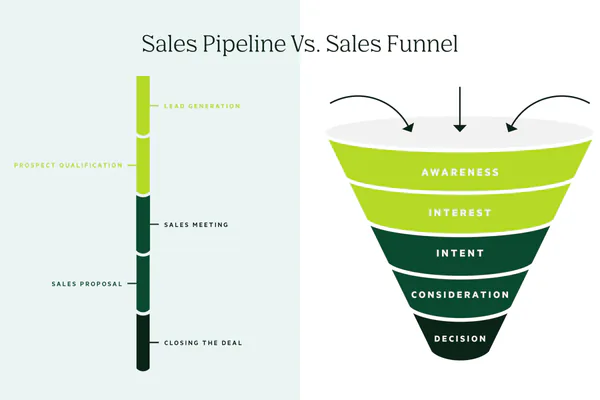
A sales funnel is a structured way to describe how prospects move from curiosity to commitment. It helps a business see the full conversion path instead of focusing only on the final purchase. That matters because a sale usually does not happen in one step. People often need multiple interactions before they trust a brand enough to buy.
The funnel idea is useful because it reflects a basic reality: not every prospect is equally ready to act. Some people are just discovering a problem. Others are comparing options. A smaller group is actively evaluating whether your offer is the right fit. The sales funnel gives those different moments a shape and a sequence.
Why it is called a funnel
The top of the funnel is wider because it includes a larger audience. At this stage, many people may see an ad, read a blog post, hear about a brand, or visit a landing page. As they move downward, the audience becomes smaller and more qualified. That is not a flaw. It is the normal process of filtering for fit, timing, budget, urgency, and trust.
What the funnel represents in real business terms
In practice, a sales funnel can represent several actions, such as:
- Seeing a product page
- Signing up for a free trial
- Booking a sales call
- Requesting a quote
- Opening a proposal
- Completing a purchase
Different businesses build different funnels, but the core logic remains the same. The funnel is not just a diagram. It is a way to organize how a business attracts, qualifies, nurtures, and converts potential customers.
Why the concept still matters
Some people argue that buying journeys are no longer linear, and that is partly true. Modern customers may jump between channels, revisit offers, compare competitors, and delay decisions. Even so, the funnel remains useful because it provides a simple operational model. It helps teams answer practical questions such as where leads are getting stuck, what information buyers still need, and which stage needs improvement.
Why Sales Funnels Matter for Business Growth
Businesses that do not understand their funnel often make the same mistake repeatedly: they chase more traffic when the real issue is poor conversion. A sales funnel shifts the focus from volume alone to movement. It asks not only how many people arrive, but how many advance.
Funnels create visibility
Without a funnel, sales performance can feel random. One month looks strong, the next looks weak, and nobody is sure why. A funnel breaks the process into measurable stages. That makes it easier to see whether the problem is:
- Not enough qualified leads entering the system
- Weak follow-up after initial interest
- Poor alignment between the offer and buyer needs
- Friction during checkout, proposal review, or onboarding
Funnels improve forecasting
When a company knows roughly how many people convert from one stage to the next, it can make better projections. For example, if 100 qualified leads usually produce 20 consultations and those consultations usually produce 5 customers, the business can estimate future revenue more realistically. That is valuable for planning hiring, budget allocation, and sales targets.
Funnels support smarter decision-making
A well-managed sales funnel also helps businesses decide where to invest effort. If awareness is strong but intent is weak, the problem may be messaging or trust. If many people request demos but very few buy, the issue may be qualification, pricing, or the sales conversation itself. Instead of treating sales as a mystery, the funnel turns it into a system that can be reviewed and improved.
The Main Stages of a Sales Funnel
Sales funnels are often described in slightly different ways, but a practical six-stage version includes awareness, interest, consideration, intent, evaluation, and purchase. Some businesses simplify those steps, while others add more detail. The exact labels matter less than understanding what the buyer is thinking at each point.
1. Awareness
This is the first moment a prospect becomes aware of a business, product, or problem solution. Awareness can come from search engines, referrals, ads, social media, webinars, industry events, or content marketing. At this stage, the goal is not to force a sale. The goal is to become visible and relevant.
A prospect in the awareness stage may be thinking, I did not know this company existed or I need to understand my options.
2. Interest
Interest begins when awareness turns into active attention. The prospect wants to learn more. They may read more pages, join an email list, watch a product demo, download a guide, or follow the brand on social media. This stage is about capturing curiosity before it disappears.
Businesses often lose prospects here by being too vague, too slow, or too generic. If the next step is unclear, interest fades.
3. Consideration
In the consideration stage, the prospect is no longer just browsing. They are comparing solutions. They may be reviewing features, pricing, testimonials, case studies, service packages, or competitor alternatives. This is where the business needs to explain why its offer is a strong fit.
For many companies, this stage is where trust-building matters most. Strong proof points can include:
- Customer reviews
- Success stories
- Free consultations
- Transparent pricing information
- Clear product comparisons
4. Intent
Intent appears when a prospect signals that they may be ready to act. They might add items to a cart, request a proposal, schedule a call, start a free trial, or ask detailed buying questions. These are stronger signals than general engagement because they suggest real buying interest.
This stage is where sales teams often step in directly. Good follow-up timing is critical. If a prospect shows intent and gets no response, the funnel leaks badly.
5. Evaluation
Evaluation is the stage where the buyer makes a final judgment. They may be deciding between two vendors, reviewing terms internally, discussing pricing with stakeholders, or considering risk. In B2B settings, evaluation can involve procurement, management approval, legal review, or technical validation. In B2C settings, it may be shorter but still important.
A business should reduce uncertainty here. Clear answers, simple next steps, and confidence-building communication can make a major difference.
6. Purchase
The purchase stage is the bottom of the funnel, where the prospect becomes a customer. This is the visible outcome most teams focus on, but it is really the result of everything that happened above it. If the earlier stages were weak, the final conversion rate will suffer.
Even after purchase, many businesses extend their funnel thinking into retention, repeat buying, and referrals. Strictly speaking, that goes beyond the classic sales funnel, but it is often where long-term profit grows.
A simple way to remember the stages
- People discover you.
- Some become interested.
- A smaller group compares you seriously.
- Qualified prospects show intent.
- They evaluate the final decision.
- A portion of them buy.
Simple Sales Funnel Example
Consider a small web design agency that specializes in websites for local service businesses. Its sales funnel might look like this:
- Awareness: A plumbing business owner finds a blog article through Google about improving local lead generation.
- Interest: The owner clicks through to the agency site and downloads a free checklist on converting more website visitors into phone calls.
- Consideration: Over the next few days, the owner reads case studies, checks pricing ranges, and reviews before-and-after website examples.
- Intent: The owner books a consultation call using the website form.
- Evaluation: During the call, the agency explains the process, expected timeline, and estimated return on investment. A proposal is sent afterward.
- Purchase: The owner accepts the proposal and pays the project deposit.
What this example shows
This example makes an important point: the sale did not begin at the payment stage. It began much earlier, when useful content attracted the right person and guided them toward a clear next step. Every stage had a role. The blog article created awareness, the checklist built interest, the case studies supported consideration, and the consultation enabled evaluation.
How the same logic works in ecommerce
An online store would use similar funnel logic, even if the steps are faster:
- A shopper sees an Instagram ad for running shoes
- They click to view the product page
- They read reviews and compare colors or sizes
- They add the product to the cart
- They review shipping costs and return terms
- They complete checkout
The channel changes, but the funnel principle stays the same.
B2B and B2C Funnel Differences
The phrase sales funnel applies to both B2B and B2C businesses, but the funnel usually behaves differently in each case. Understanding that difference helps businesses avoid using the wrong tactics for the wrong audience.
B2B funnels are usually longer
In B2B sales, purchases often involve higher prices, more stakeholders, and more risk. A buyer may need to convince a manager, finance team, or operations team before moving forward. As a result, the funnel tends to be slower and more layered.
Common B2B funnel features include:
- Longer evaluation periods
- Sales calls or demos
- Formal proposals
- Decision-makers beyond the original lead
- Heavier use of case studies and ROI arguments
B2C funnels are often faster
In B2C sales, a single consumer can usually make the purchase decision alone. That does not mean the funnel is easy, but it is often shorter. Strong visuals, product benefits, reviews, promotions, and frictionless checkout matter more because the decision can happen quickly.
B2C funnels commonly rely on:
- Emotional appeal and convenience
- Immediate product clarity
- Promotions or urgency
- Retargeting ads for abandoned carts
- Streamlined mobile checkout
The key practical difference
B2B funnels need more education and internal justification. B2C funnels need more speed and simplicity. In both cases, the business wins by reducing friction at the exact moment the buyer is ready to move forward.
Common Problems at Each Funnel Stage
Every funnel has weak points. The important thing is to diagnose them accurately. Many companies try to fix the bottom of the funnel when the real problem is happening near the top, or they blame lead quality when the issue is actually a weak sales process.
Top-of-funnel problems
If awareness or interest is weak, the business may be attracting the wrong audience or failing to create enough relevance. Common signs include low click-through rates, poor landing page engagement, or traffic that never returns.
Typical causes include:
- Broad targeting that attracts unqualified visitors
- Messaging that does not match buyer intent
- Weak headlines or unclear value propositions
- Content that gets attention but not serious interest
Middle-of-funnel problems
If prospects show initial interest but do not move into serious consideration, trust is often the issue. They may not understand the offer, the difference from competitors, or the expected outcome.
Common middle-funnel issues include:
- Not enough proof
- Confusing pricing or packaging
- Poorly designed lead nurturing emails
- No clear next action
Bottom-of-funnel problems
When prospects reach the evaluation or purchase stage and still do not convert, the problem is often friction. That friction may come from slow response times, unclear contracts, hidden fees, complicated checkout, or weak sales conversations.
Important warning signs include:
- High demo-to-close drop-off
- Frequent abandoned carts
- Many proposal views but few approvals
- Price objections that reveal poor positioning
Why diagnosis matters more than guesswork
A funnel is only helpful if it changes behavior. If a company sees that lots of people are entering but very few are qualifying, it should improve qualification and messaging. If people are qualifying but not buying, it should improve the offer, proof, and conversion experience. The point is not to collect data for its own sake. The point is to find the stage that limits growth.
How to Improve Sales Funnel Performance
Improving a funnel does not always require more spending. Often, it requires clearer thinking about buyer behavior. The best improvements are usually specific, stage-based, and measurable.
Improve targeting at the top
If the wrong people enter the funnel, later conversions will stay weak. Businesses should refine targeting by channel, keyword intent, audience segment, and offer match. A smaller but better-fit audience usually outperforms a larger unqualified one.
Strengthen the value proposition
Prospects need to understand quickly what the offer is, who it is for, and why it matters. Strong value propositions reduce confusion and help the right people self-identify. Useful questions include:
- What problem do we solve?
- What result do buyers want?
- Why should they trust us?
- Why choose us instead of waiting or choosing a competitor?
Use better lead nurturing
Not every prospect is ready to buy immediately. That is why lead nurturing matters. Email sequences, remarketing, educational content, comparison guides, and follow-up messages can keep the business visible while the buyer moves toward readiness.
Good nurturing is not about spamming prospects. It is about providing the information they need at the right moment.
Reduce friction before the close
Conversion often improves when businesses remove unnecessary obstacles. That may mean simplifying forms, clarifying pricing, shortening checkout, speeding up response times, or making proposals easier to review and accept.
Small improvements near the bottom of the funnel can produce outsized revenue impact because they affect prospects who are already close to buying.
Align marketing and sales
One of the most overlooked funnel improvements is better alignment between teams. Marketing may define a lead differently from sales. Sales may complain about lead quality without giving useful feedback. Strong funnels require shared definitions for terms like lead, qualified lead, opportunity, and closed customer.
When both teams understand the funnel the same way, follow-up improves and wasted effort decreases.
Metrics Used to Measure Funnel Success
A sales funnel should be measured, not imagined. Metrics help businesses evaluate where movement is healthy and where performance is breaking down.
Conversion rate
This is the percentage of people who move from one stage to the next. It is one of the most important funnel metrics because it shows whether progression is happening.
For example, if 1,000 visitors reach a landing page and 80 fill out a form, the visitor-to-lead conversion rate is 8%.
Click-through rate
Click-through rate, often shortened to CTR, measures how many people click after seeing a link, ad, or call to action. It helps evaluate the strength of early-stage messaging and audience match.
Lead-to-customer rate
This metric tracks how many leads eventually become customers. It is especially useful because it connects acquisition to revenue rather than stopping at lead generation.
Cost per lead
Cost per lead shows how much the business spends to generate one lead. This metric is helpful, but it should not be judged in isolation. Cheap leads are not useful if they rarely convert.
Customer acquisition cost
Customer acquisition cost, or CAC, measures how much it costs to acquire a paying customer. It is a bottom-line funnel metric because it reflects the combined efficiency of multiple stages.
Sales cycle length
This tells a business how long it typically takes for a lead to become a customer. In B2B settings, reducing sales cycle length can be almost as valuable as increasing volume.
Stage-by-stage measurement matters most
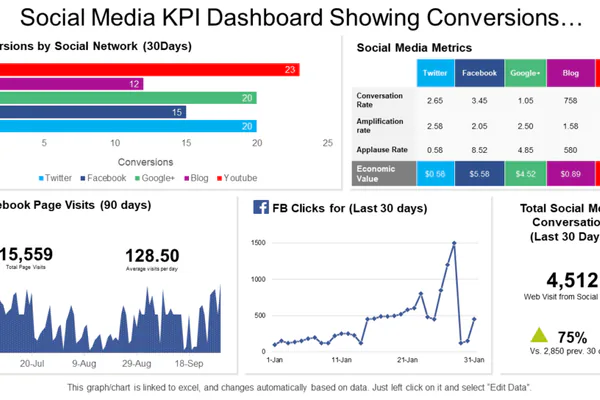
The real value of funnel measurement is not just knowing totals. It is understanding where momentum slows. A funnel dashboard should help answer questions like:
- Are enough qualified leads entering?
- Which stage has the highest drop-off?
- Are high-intent prospects converting efficiently?
- Is customer acquisition cost sustainable?
Sales Funnel vs Marketing Funnel
The terms sales funnel and marketing funnel are closely related, but they are not exactly the same. Many people use them interchangeably, which creates confusion.
How a marketing funnel is different
A marketing funnel usually focuses more on attracting attention, generating awareness, and creating early interest. It often includes channels such as SEO, content, social media, email capture, and advertising. Its purpose is to bring the right people closer to a buying decision.
How a sales funnel is different
A sales funnel is more conversion-focused. It deals more directly with qualification, objections, intent signals, proposals, demos, follow-up, and closing. In other words, the sales funnel often begins where marketing traction becomes serious buying movement.
Where they overlap
In real businesses, the two funnels overlap heavily. A lead magnet may belong to marketing, but the follow-up sequence may also affect sales conversion. A webinar may generate awareness, build trust, and create purchase intent at the same time. That is why many teams think of the full customer journey as one connected funnel with shared responsibility.
The practical takeaway is simple: marketing creates momentum, and sales converts momentum into revenue. Businesses perform better when they understand both roles and remove the gap between them.
Key Takeaways for Building a Better Funnel
A strong sales funnel is not just a theory from textbooks. It is a working model for how people move toward a buying decision. Businesses that understand their funnel can identify weak points faster, communicate more clearly, and improve conversion with less guesswork.
The main lessons to remember
- A sales funnel explains how prospects move from awareness to purchase.
- Each stage reflects a different buyer mindset and requires different messaging.
- Not every lead should convert, but the funnel should filter prospects efficiently.
- Weak sales results often come from stage-specific problems, not a total lack of demand.
- Measurement matters because conversion improvements usually come from diagnosing the right bottleneck.
How to apply funnel thinking
If you want to improve results, start by mapping your current funnel honestly. Identify how people enter, what actions show interest, when intent appears, and what happens before purchase. Then measure each stage and look for the biggest drop-offs. That approach is far more effective than changing random tactics every few weeks.
In the end, the best sales funnels do not pressure people into buying. They reduce confusion, build confidence, and make the next step easy for the right prospect. When that happens consistently, sales become more predictable, marketing becomes more accountable, and business growth becomes easier to manage.
That is why understanding the sales funnel matters. It gives businesses a clearer view of how revenue is actually created and a practical framework for improving it over time.
