
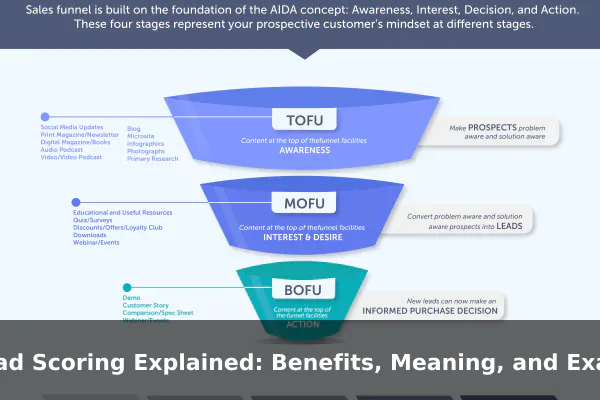
Not every lead deserves the same amount of attention at the same time. Some people visit a website once and leave. Others compare pricing, download a guide, open multiple emails, and request a demo within a few days. Lead scoring is the method businesses use to tell those leads apart so marketing and sales teams can focus on the prospects most likely to become customers.
In plain English, lead scoring is a ranking system. It gives points to leads based on how well they match the ideal customer profile and how strongly they behave like someone ready to buy. That sounds simple, but it can have a major effect on campaign performance, follow-up speed, and conversion efficiency. Instead of treating every inquiry the same way, companies can prioritize the people showing the best combination of fit and intent.
This matters because modern marketing generates a large volume of contacts. A business may collect leads from SEO, paid ads, webinars, social media, forms, newsletters, free trials, or referral programs. Without a clear scoring framework, sales teams often chase cold prospects while warmer opportunities sit untouched. Lead scoring helps prevent that by turning scattered signals into a more structured decision-making process.
In this guide, you will learn what lead scoring means, why it matters, how different scoring models work, and what practical examples look like across B2B, SaaS, and email marketing. You will also see how to build a scoring system that is useful in real life rather than impressive only on paper.
What Lead Scoring Means in Marketing
Lead scoring is the process of assigning numerical values to prospects based on specific attributes and actions. The goal is to estimate which leads are the best fit for the business and which ones show meaningful buying intent. A higher score usually means a lead should be prioritized for follow-up, nurturing, or direct sales contact.
Lead scoring as a ranking system
Think of lead scoring as a filter that helps teams organize attention. A lead may receive points because they work at a target company size, have a relevant job title, visited a product page, or responded to a campaign. They may lose points if they unsubscribe, use a student email for an enterprise offer, or remain inactive for a long period.
The score does not guarantee a sale. It simply improves the odds that the team is focusing on the right people first. That makes it a practical prioritization tool rather than a prediction of certainty.
Lead scoring vs. lead qualification
Lead scoring and lead qualification are related, but they are not identical. Lead qualification often refers to a broader judgment about whether a lead is worth pursuing at all. Lead scoring is the structured method used to support that judgment. Qualification may involve human review, discovery calls, or frameworks such as budget, authority, need, and timing. Scoring adds consistency by translating those ideas into points.
Why marketers use it
Marketers use lead scoring to decide which contacts should receive more nurturing, which should be sent to sales, and which should stay in automated workflows. Sales teams use it to rank outreach lists and respond more quickly to higher-value opportunities. In that sense, lead scoring sits at the point where marketing activity and sales action meet.
- Fit answers: Is this the right type of prospect?
- Intent answers: Is this prospect acting like someone who may buy?
- Priority answers: Who should the team focus on first?
Why Lead Scoring Matters for Growth
Lead scoring is not just a reporting feature inside a CRM. When implemented well, it can improve how revenue teams use time, budget, and attention. Growth often depends less on generating more raw leads and more on recognizing which leads are actually valuable.
Better prioritization for sales teams
Sales representatives usually have limited time. If they call every lead in the order they arrived, they may waste energy on weak opportunities. A scoring system helps them focus first on the leads showing the strongest potential. This increases the chance of having better conversations earlier in the buying cycle.
Stronger marketing efficiency
Marketing teams benefit because lead scoring reveals which channels and campaigns produce higher-quality leads, not just more leads. A campaign that generates fewer contacts but better scores may be more valuable than one that fills the database with low-intent names.
Faster response to buying signals
Some lead behaviors deserve immediate attention. For example, a prospect who visits the pricing page three times, opens a product email, and submits a demo request is sending a much stronger signal than someone who only downloaded a top-of-funnel guide. Lead scoring helps teams react faster to these moments.
Better alignment between marketing and sales
Many companies struggle because marketing says it is delivering leads while sales says those leads are not ready. A shared scoring model creates a common language. Teams can agree on what counts as a marketing-qualified lead, when a lead becomes sales-ready, and which signals deserve escalation.
- Higher conversion focus: teams spend more time on leads with stronger buying potential.
- Lower wasted effort: low-fit or low-intent leads stay in nurture programs instead of consuming sales time.
- Clearer handoff rules: marketing and sales know when a lead should move to the next stage.
- Improved reporting: businesses can connect lead quality to revenue outcomes more accurately.
How Lead Scoring Works

A lead scoring model usually combines two broad dimensions: who the lead is and what the lead does. The first dimension measures fit. The second measures intent or engagement. Together, they create a more useful picture than either one alone.
Demographic and firmographic signals
These signals help determine whether the lead matches the business’s ideal customer profile. For consumer-focused brands, this may include location, age group, or income indicators. For B2B companies, it often includes job title, department, company size, industry, and geographic market.
Examples of positive fit signals include:
- A decision-maker title such as Head of Marketing or Revenue Operations Manager
- A company size that matches the product’s pricing and onboarding model
- An industry that the business serves particularly well
- A location within the company’s serviceable market
Examples of negative fit signals include:
- A student or personal email for a high-ticket B2B solution
- A company that is far too small or too large for the offer
- An industry outside compliance or support coverage
- A region where the business does not operate
Behavioral signals
Behavioral data measures what the lead actually does. This is often the strongest indicator of current buying interest. A lead who actively engages with product-related content typically deserves more attention than one who only subscribed once and never returned.
Common behaviors that earn points include:
- Opening and clicking email campaigns
- Visiting key pages such as pricing, demo, features, or case studies
- Downloading white papers, templates, or product guides
- Registering for webinars or attending live events
- Starting a free trial or requesting a consultation
Engagement intensity matters
Not every action should have the same weight. A single blog page visit is a light signal. A return visit to the pricing page after opening a product comparison email is much stronger. Scoring works best when points reflect the likely value of each action instead of treating all engagement equally.
Negative scoring and score decay
One of the most overlooked parts of lead scoring is subtraction. Some behaviors should reduce a score, and some scores should decrease over time if activity stops. This prevents stale or misleading rankings.
Examples of negative scoring include:
- Unsubscribing from email lists
- Ignoring campaigns for 60 or 90 days
- Using fake form details or low-quality contact information
- Repeated visits only to careers pages instead of product pages
Score decay is especially important because interest changes. A lead who looked highly engaged three months ago may no longer be active. Without decay rules, the database may keep old opportunities at the top of the list for too long.
Common Lead Scoring Models
There is no single perfect model for every company. The best scoring system depends on sales cycle length, average deal value, traffic volume, and the quality of available data. Still, most businesses use one of a few common models.
Rule-based scoring
This is the most accessible starting point. Teams create a list of attributes and actions, then assign points manually. For example, a pricing page visit may be worth 10 points, while a webinar registration may be worth 15. A director-level title may add 20 points, while a non-target industry may subtract 10.
Rule-based scoring is popular because it is easy to understand, easy to explain internally, and easy to adjust after reviewing performance.
Fit vs. interest scoring
Some companies split scoring into two separate values: one for profile fit and one for engagement level. This creates better visibility. A lead may be a perfect fit but show weak intent, or a poor fit may be highly active. When those two signals are separated, teams can decide how to handle each case more intelligently.
For example:
- High fit, low interest: nurture with targeted education
- Low fit, high interest: review manually before sales outreach
- High fit, high interest: send directly to sales
Threshold-based handoff models
In this approach, a lead becomes marketing-qualified or sales-qualified once it crosses a specific score threshold. The threshold could be 50, 75, or 100 points depending on the system. The important part is not the number itself, but whether the threshold reflects real conversion patterns.
Predictive scoring
More advanced companies sometimes use machine learning or predictive analytics to identify which signals correlate most strongly with conversion. Instead of manually deciding every point value, the system learns from past customer data. This can be useful at scale, but it still needs human review. If the data is messy or biased, predictive scoring can amplify poor assumptions rather than fix them.
For most small and mid-sized teams, a thoughtful rule-based model is often enough to create strong improvements before advanced tools are needed.
Lead Scoring Examples by Scenario
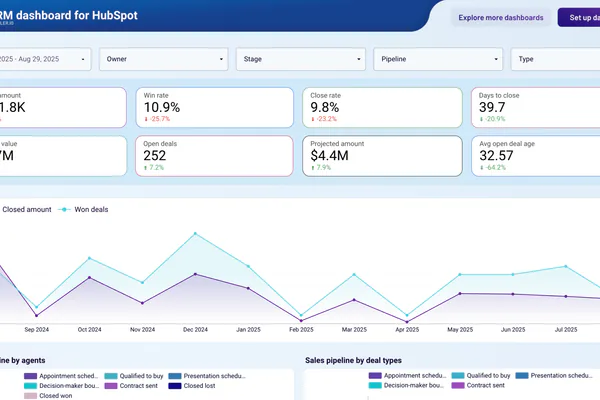
Examples make lead scoring easier to understand because the concept becomes practical when attached to real workflows. The exact numbers below are only illustrations, but they show how a business might turn intent and fit into action.
B2B software example
Imagine a company selling workflow software to mid-sized businesses.
- Job title includes Manager, Director, or VP: +15
- Company has 50 to 500 employees: +20
- Industry is logistics, SaaS, or professional services: +10
- Visited pricing page: +10
- Downloaded implementation guide: +12
- Requested demo: +25
- Used personal email address: -8
- No activity for 45 days: -10
In this case, a lead with a score above 60 may be sent to sales for direct follow-up, while a lead between 30 and 59 stays in a nurture sequence until stronger intent appears.
SaaS free trial example
A SaaS company with a self-serve trial may score product usage more heavily than content engagement.
- Started free trial: +20
- Invited teammates into account: +15
- Completed onboarding checklist: +10
- Connected an integration: +20
- Visited upgrade page: +12
- Inactive for 7 days during trial: -15
This model prioritizes activation behavior because product usage is a stronger buying signal than general marketing engagement.
Email marketing example
A newsletter-driven business may rely more on email and site activity.
- Subscribed through a lead magnet: +5
- Opened three campaigns in 14 days: +8
- Clicked a product link: +10
- Visited a sales page from email: +12
- Registered for a webinar: +15
- Unsubscribed from promotional emails: -20
This kind of system helps separate passive subscribers from readers who are moving toward commercial interest.
Service business example
A consulting or agency business often values inquiry quality and urgency.
- Requested a quote through a contact form: +20
- Budget range matches minimum engagement level: +15
- Timeline is within 30 days: +10
- Project type matches core service offering: +15
- Message indicates job seeking rather than buying: -25
That simple scoring rule can immediately improve which inquiries receive fast outreach from the business owner or sales manager.
How to Build a Practical Lead Scoring System
The biggest mistake businesses make is creating a scoring system that looks sophisticated but is too complicated to maintain. A practical system starts small, uses clear logic, and improves over time.
1. Define your ideal customer profile
Start with the characteristics of customers who are the best fit. Review closed deals, high-retention accounts, and profitable segments. Identify patterns such as company size, industry, role, or location.
2. Identify high-value buying signals
Next, list behaviors that suggest growing purchase intent. These are usually actions close to commercial decision-making, not just general awareness. Pricing visits, demo requests, comparison content, trial activity, and proposal views often matter more than casual blog traffic.
3. Assign point values carefully
Use simple values at first. Give higher points to signals strongly linked to conversion. Use lower points for light engagement. Add negative values where appropriate. Avoid pretending you already know the perfect formula. The point system should be informed, not fictional.
4. Create clear threshold rules
Define what happens when a lead reaches a certain score. For example:
- 0 to 24 points: early-stage nurture
- 25 to 49 points: warm lead, more educational content
- 50 to 74 points: marketing-qualified lead for closer review
- 75+ points: sales-ready outreach
The important part is that each threshold triggers a useful action.
5. Test against real outcomes
After launch, compare scores with actual conversions. Did high-scoring leads convert more often? Did low-scoring leads rarely close? If the answer is no, the model needs adjustment. A good scoring system learns from results, not assumptions.
6. Keep the model understandable
If nobody on the team can explain why a lead scored 82 instead of 46, the system will lose trust. Clarity matters. Teams should be able to understand the scoring logic and challenge it when needed.
- Start simple: fewer signals are easier to validate.
- Use sales feedback: frontline conversations often reveal scoring gaps quickly.
- Document the rules: avoid hidden logic that only one person understands.
Mistakes That Make Lead Scores Unreliable
Lead scoring fails when businesses assume the tool itself creates accuracy. It does not. The value comes from sound criteria, regular review, and disciplined use.
Scoring too many minor actions
If every page view, click, and open gets points, scores become noisy. A lead can appear highly engaged simply because they skimmed content without real purchase intent. Focus on actions with meaningful commercial relevance.
Ignoring negative signals
Some models only add points and never subtract them. That inflates scores and hides disinterest. Negative signals are essential because they keep rankings realistic.
Not aligning with sales reality
A marketing team may believe certain behaviors signal readiness, but sales conversations may prove otherwise. If sales repeatedly says high-scoring leads are weak, do not defend the model. Fix it.
Using static assumptions for too long
Customer behavior changes. Campaigns change. Products change. A score built last year may not reflect this year’s buying journey. Scoring models should evolve as the business learns.
Skipping score decay
Old activity should not keep a lead permanently hot. Without time-based decay, the system rewards historical engagement more than current intent.
Making the model too complex too early
A highly technical setup may look impressive but become impossible to maintain. Complexity should be earned. If a simple model explains outcomes well, keep it simple.
Tools and Metrics to Track Success
Lead scoring works best when it is connected to systems that can store contact data, track behavior, and trigger workflows. This usually means a CRM, a marketing automation platform, or both.
Useful tool categories
- CRM systems: to store lead records, sales stages, and deal outcomes
- Marketing automation tools: to score behavior, segment contacts, and trigger nurture sequences
- Analytics platforms: to measure source quality and on-site engagement
- Product analytics: especially useful for SaaS free trials and user activation scoring
Metrics that show whether scoring is working
A scoring model should be evaluated by business outcomes, not by how neat the score sheet looks. Useful metrics include:
- Lead-to-opportunity conversion rate
- Opportunity-to-customer conversion rate
- Average sales response time for high-scoring leads
- Percentage of scored leads accepted by sales
- Revenue influenced by marketing-qualified leads
- Win rate by score band
If leads scoring above a certain threshold consistently close at a much higher rate, the model is doing useful work. If score bands show little difference in performance, the criteria likely need refinement.
When to Review and Adjust Your Scoring Model
Lead scoring should never be treated as a one-time setup. It is an operating system for prioritization, and operating systems need maintenance.
Review after major campaign changes
If the business launches new acquisition channels, new content formats, or new conversion offers, scoring weights may need to shift. A webinar-driven campaign may create very different behavior patterns than a search-driven one.
Review after product or pricing changes
When the offer changes, buyer intent signals often change too. A new free trial, a higher price point, or an enterprise package may alter what a qualified lead looks like.
Review after enough data accumulates
It is useful to review the model after a meaningful sample of leads has moved through the system. That could be monthly, quarterly, or after a set volume of opportunities depending on business size.
Review with both marketing and sales input
The best scoring reviews are collaborative. Marketing can explain campaign behavior, while sales can explain objection patterns, urgency signals, and lead quality from direct conversations. That combination creates better decisions than isolated reporting.
As a practical rule, review your lead scoring model whenever one of these happens:
- Sales complains that high-scoring leads are weak
- Too many low-scoring leads convert unexpectedly
- New campaigns generate different engagement patterns
- The business changes audience, offer, or market focus
- Conversion rates fall without a clear traffic explanation
Conclusion
Lead scoring is one of the most useful ways to bring structure to lead management. It helps businesses rank prospects based on both fit and intent, making it easier to decide who should be nurtured, who should be contacted quickly, and who is unlikely to convert. When applied thoughtfully, it improves sales focus, strengthens marketing efficiency, and creates a more consistent handoff between teams.
The most effective lead scoring systems are not the most complicated ones. They are the ones built from real customer patterns, tied to clear business actions, and updated as results come in. If you start with a simple model, include both positive and negative signals, and test the scores against actual conversions, lead scoring can become a practical growth tool rather than just another dashboard number.
For businesses trying to turn more leads into revenue without wasting time on the wrong prospects, lead scoring is not just a technical feature. It is a smarter way to decide where effort should go next.
